
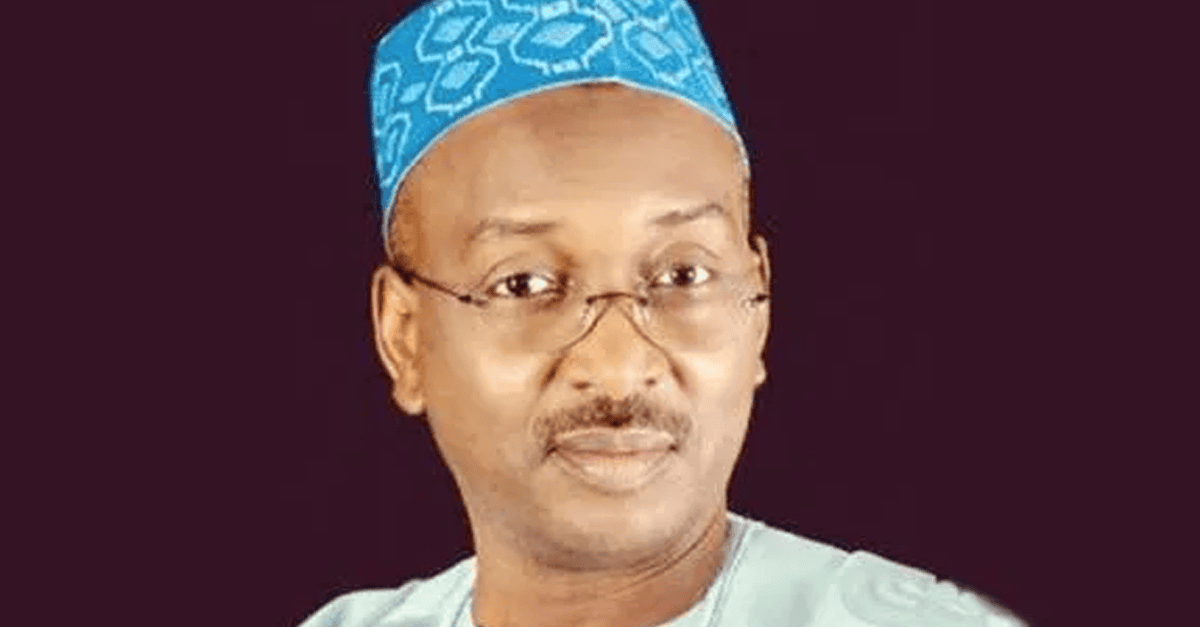
The African Democratic Congress (ADC) in Kaduna State has been plunged into further turmoil following the resignation of Salisu Lukman, a prominent ally of former governor Nasir El-Rufai. Lukman, who served as the director general of the El-Rufai Support Group, announced his departure in a strongly worded letter dated March 15, 2025, citing a leadership crisis that had reduced him to the status of a political orphan. His exit marks a significant setback for the party, which had hoped to leverage the influence of El-Rufai's political network to challenge the ruling All Progressives Congress (APC) and Peoples Democratic Party (PDP) in the 2027 elections.
Lukman's resignation is the latest in a series of defections that have rocked the ADC since its merger with El-Rufai's political camp in early 2024. The party, which once positioned itself as a credible third force with a presence in 28 states, now faces an existential crisis as internal squabbles threaten to tear it apart. For the former governor, who has been eyeing a presidential run, the loss of a trusted lieutenant is a stark reminder of the challenges of building a cohesive political movement outside the dominant parties.
The Fallout in Kaduna
Lukman's departure stems from a bitter dispute over the leadership of the ADC in Kaduna. In his resignation letter, which was addressed to the party's national chairman, Ralph Nwosu, and copied to the Kaduna State chairman, he lamented that decisions regarding party representation were being made in a manner that reduced him to a bastard, forcing him to excuse himself from party activities. This language, while blunt, reflects the deep-seated frustrations within the ADC's Kaduna chapter, where factions loyal to El-Rufai and those aligned with the national leadership have clashed repeatedly.
The crisis came to a head during the ward congresses held on March 5-7, 2025. Lukman's supporters, who had registered over 5,000 new members in Kaduna North and South, were sidelined in favour of candidates backed by the national chairman, Ralph Nwosu. Sources within the party confirm that Lukman had been pushing for a more inclusive process, but his efforts were met with resistance from the national secretariat, which allegedly imposed a list of 150 candidates without consulting local structures. The result was a series of acrimonious meetings that ended with Lukman walking out on March 12.
For the ADC, the loss of Lukman is particularly damaging because of his grassroots connections. As a former national vice chairman of the APC in the North-West, he brought with him a network of loyalists that gave the ADC a foothold in Kaduna. Without him, the party's chances of winning any significant number of votes in the state are slim. In the 2023 elections, the ADC polled only 12,847 votes in Kaduna, compared to the APC's 1.2 million and the PDP's 1.1 million. Lukman's network was expected to help the party at least double that tally in 2027, but now that target seems impossible.
A Pattern of Defections
Lukman's exit is not an isolated incident. Since El-Rufai joined the ADC in February 2024, the party has haemorrhaged members, with several key figures citing poor leadership and lack of internal democracy. In February 2025, the party's deputy national chairman, Chukwudi Umeaba, resigned, accusing Nwosu of running the ADC like a personal fiefdom. Umeaba's departure was followed by that of the national secretary, Aliyu Bello, who also complained of high-handedness and the diversion of campaign funds totalling N50 million meant for the 2027 campaign.
The ADC was supposed to be El-Rufai's vehicle for a presidential bid, but the infighting has made it a liability. Political analysts in Abuja note that the former governor's decision to join a minor party was always a gamble, and the recent events suggest it may not pay off. The ADC lacks the infrastructure and funding to compete with the APC and PDP, which spent an estimated N10 billion each in the 2023 elections. The constant crises are scaring away potential allies, including northern governors who had expressed interest in a coalition.
What Lukman's Resignation Means for 2027
Salisu Lukman's resignation is a clear signal that the ADC's internal problems are far from resolved. For El-Rufai, it means losing a key organiser at a critical time. The former governor had hoped to use the ADC as a platform to build a coalition of northern elites and disgruntled APC members, but without Lukman, that project is now in jeopardy. Lukman was instrumental in organising the El-Rufai Support Group, which had 50,000 registered members across 12 northern states. His departure leaves a void that will be hard to fill.
Lukman himself has not indicated his next move, but sources say he is likely to return to the APC or join another party, such as the New Nigeria Peoples Party (NNPP). His departure weakens the ADC's ability to field credible candidates in Kaduna, where the party was hoping to win at least one senatorial seat. The party's national leadership has tried to downplay the crisis, with Nwosu calling Lukman's resignation a minor setback, but the reality is that the ADC is now a shell of what it was a year ago. In a party meeting on March 18, only 12 of the 36 state chairmen attended, a sign of widespread disillusionment.
The Bigger Picture: Nigeria's Third-Party Problem
The ADC's troubles highlight a broader issue in Nigerian politics: the difficulty of building a viable third party. Since the return to democracy in 1999, no third party has managed to win the presidency, and only a handful have won governorship elections. The reasons are well known: the two major parties control access to resources, the electoral commission is often biased, and voters tend to stick with familiar brands. For instance, in the 2023 presidential election, the Labour Party, the most successful third party in recent history, won only 12.5% of the vote, while the APC and PDP together took 87.5%.
El-Rufai's attempt to break this mould was always a long shot, but the ADC's implosion shows that even with a strong candidate, internal democracy is essential. Parties that are built around a single personality often crumble when that personality's influence wanes. The ADC, which was supposed to be a coalition of like-minded progressives, has instead become a battleground for personal ambitions. The party's constitution, which gives the national chairman sweeping powers, has been a flashpoint. Nwosu has been accused of using it to sideline rivals, a charge he denies.
A Standalone Summary
Salisu Lukman's resignation from the ADC is a major blow to Nasir El-Rufai's political ambitions, as it deprives him of a key ally and exposes the deep divisions within the party. The crisis in Kaduna is a microcosm of the ADC's national problems, which include poor leadership, lack of internal democracy, and a failure to integrate new members. Without urgent reforms, the ADC risks becoming irrelevant ahead of the 2027 elections. The party's membership has dropped from an estimated 200,000 in 2024 to barely 50,000 today, according to party insiders.
Way Forward for El-Rufai
For El-Rufai, the path forward is unclear. He could try to patch things up with Lukman, but the damage may be too deep. Alternatively, he could abandon the ADC and seek a new platform, perhaps by merging with another minor party like the Social Democratic Party (SDP) or returning to the APC. The latter option would be humiliating but might be his best chance of staying relevant. El-Rufai has not spoken publicly since Lukman's resignation, but his aides say he is considering all options. A meeting with APC leaders in Abuja is reportedly scheduled for early April.
Meanwhile, the ADC's national chairman, Ralph Nwosu, has remained defiant, insisting that the party will survive Lukman's exit. But with each defection, the party's chances of fielding a strong candidate in 2027 diminish. The ADC may still exist on paper, but in the hearts of voters, it is already dead. A recent poll by NOI Polls found that only 2% of Nigerians would consider voting for the ADC in 2027, down from 5% in 2024.
In the end, the story of Salisu Lukman's resignation is a cautionary tale about the perils of political ambition. It shows that even the most carefully laid plans can be undone by ego and infighting. For Nigeria's democracy, it is a reminder that until third parties learn to govern themselves, they will never be taken seriously. The ADC's collapse is not just El-Rufai's loss; it is a missed opportunity for the millions of Nigerians who crave a real alternative to the APC and PDP.