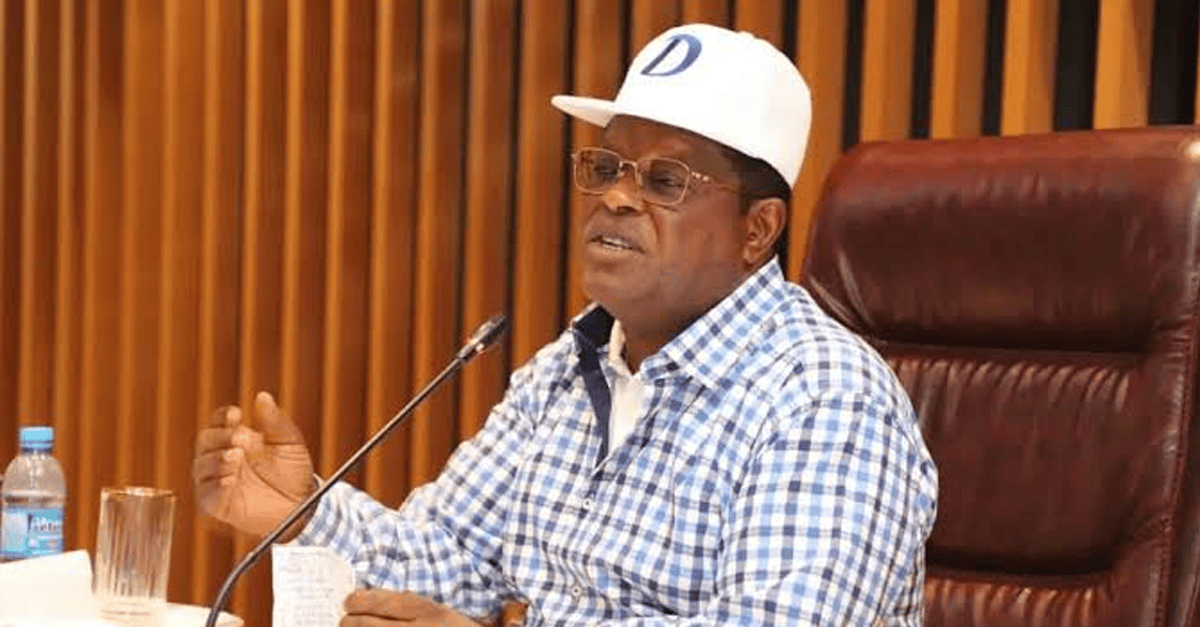
Minister of Works David Umahi has publicly addressed the controversy surrounding the death of a young nurse at his private residence in Abuja, offering his version of events amid rising public scrutiny. The incident, which has gripped national attention, involves Mary Habila, a 28-year-old nurse at the David Umahi Federal University of Health Sciences in Ebonyi State. In a press briefing held on Thursday, March 20, 2025, at the Ministry of Works headquarters in Abuja, Umahi sought to clarify the circumstances that led to the tragedy, while expressing condolences to the bereaved family. The minister's statement marks the first official response since the story broke on March 12, and it raises as many questions as it answers about the events of that fateful night.
The Incident and Initial Reactions
Mary Habila, a 28-year-old nurse from Jos, Plateau State, was found dead at Umahi's residence in the upscale Asokoro district of Abuja on the morning of March 12, 2025. Reports indicate she had been invited to the minister's home for a private medical consultation. Her body was discovered by household staff around 5:15 a.m., who alerted security personnel. The news spread quickly on Twitter and Facebook, sparking outrage and prompting calls for a thorough investigation. By March 13, the hashtag #JusticeForMary had trended nationally, with over 150,000 posts. Many Nigerians demanded transparency, given Umahi's high-profile position as a former governor of Ebonyi State (2015-2023) and current Minister of Works.
Umahi, in his briefing, described the death as a tragic accident. He stated that Habila had visited his home to attend to his wife, Rachel Umahi, who had complained of a severe headache. According to him, she was given a guest room to rest after the consultation, and her death was discovered hours later. He denied any foul play, insisting that the nurse had no known health issues. "I am deeply saddened by this incident," Umahi said. "My family and I are cooperating fully with the police to get to the bottom of this matter." He also revealed that he had personally called the Habila family on March 13 to offer condolences, a claim the family later confirmed but described as insufficient.
Umahi's Detailed Account
During the press conference, which lasted approximately 45 minutes, Umahi provided a chronological account of the events. He said Habila arrived at his residence at No. 15, Yakubu Gowon Crescent, Asokoro, around 8:00 p.m. on March 11, after being called to attend to his wife. The consultation lasted about an hour, during which Habila administered a paracetamol injection for the headache. Afterwards, Umahi claimed he was not present but was informed by his wife that Habila was offered a guest room to stay overnight, as it was late and the area was known for security concerns. He said he went to bed around 10:00 p.m. and was woken up at 5:00 a.m. by his security team, who reported that the nurse had not responded to repeated calls and knocks on her door.
Upon forcing the door open, Umahi said, they found Habila lying face down on the bed, unresponsive. He immediately instructed his driver to rush her to the National Hospital Abuja, where she was pronounced dead on arrival at 6:10 a.m. The minister expressed bewilderment at the incident, noting that Habila had appeared healthy and cheerful the previous evening. He also mentioned that a post-mortem examination was underway at the National Hospital mortuary, with samples sent to the Nigeria Police Force forensic lab in Lagos. "We are waiting for the autopsy results to know what happened," he stated. "I have nothing to hide." However, he did not explain why no medical personnel were called to the scene before moving the body, a point critics have seized upon.
The Controversy and Public Demands
Despite Umahi's explanation, skepticism remains high. Critics point to several inconsistencies: the lack of immediate medical attention, the delay in reporting the death to the police (the minister's security team reportedly informed the Apo Police Division at 7:30 a.m., over two hours after discovery), and the absence of an independent witness. The police have confirmed that they are investigating, but no arrests have been made. The family of Mary Habila, represented by her elder brother, Dr. James Habila, has called for an independent inquiry, expressing distrust in the official process. In a statement on March 15, the family demanded that Umahi recuse himself from any involvement in the investigation, given his stature and potential influence. They also requested that the case be transferred to the State Security Service (SSS) for a parallel probe.
Social media has been ablaze with hashtags demanding justice for Mary. Some users have drawn parallels to previous cases involving powerful figures, such as the death of Tina Onwuemene in 2022, where investigations were allegedly compromised. The controversy has also reignited debates about the safety of women in Nigeria and the accountability of public officials. The Nigerian Medical Association (NMA) issued a statement on March 16 calling for a transparent investigation, while the National Association of Nigerian Nurses and Midwives (NANNM) threatened to picket the ministry if no progress was made within two weeks.
A Standalone Summary of the Issue
At the heart of this tragedy is the death of a young nurse under unclear circumstances at the home of a federal minister. David Umahi has given his account, asserting it was an accident and pledging cooperation with authorities. However, public trust is fragile, and the family's call for an independent investigation reflects a broader demand for transparency in a case that touches on power, privilege, and justice. As of March 20, the autopsy results had not been released, and the police had not issued any official statement beyond confirming the investigation.
Broader Implications for Public Accountability
This incident is not just about one death; it underscores the challenges of accountability in Nigeria's political class. When a tragedy occurs in the home of a public figure, the burden of proof often shifts, and the public expects a level of scrutiny that matches the power held. Umahi's press briefing is a step toward transparency, but it may not be enough to quell the doubts. The police investigation must be seen as impartial, and the autopsy results must be made public without delay. The case also highlights the vulnerability of female healthcare workers who are often called to private homes for consultations, a practice that lacks regulatory oversight. According to Dr. Olumide Ajayi, a public health expert at the University of Ibadan, "Home visits by nurses are common but unregulated, leaving both the practitioner and the patient at risk."
Looking Ahead
As Nigeria awaits the autopsy report, the Umahi case serves as a stark reminder of the need for due process. The minister has promised to cooperate, but the test will be whether the investigation proceeds without interference. For now, the nation watches, and Mary Habila's family seeks closure. The coming weeks will determine whether this becomes a case of justice served or another story of impunity. The police have promised to release the autopsy results within 30 days, but many Nigerians remain skeptical given the history of delayed or manipulated reports in high-profile cases.