
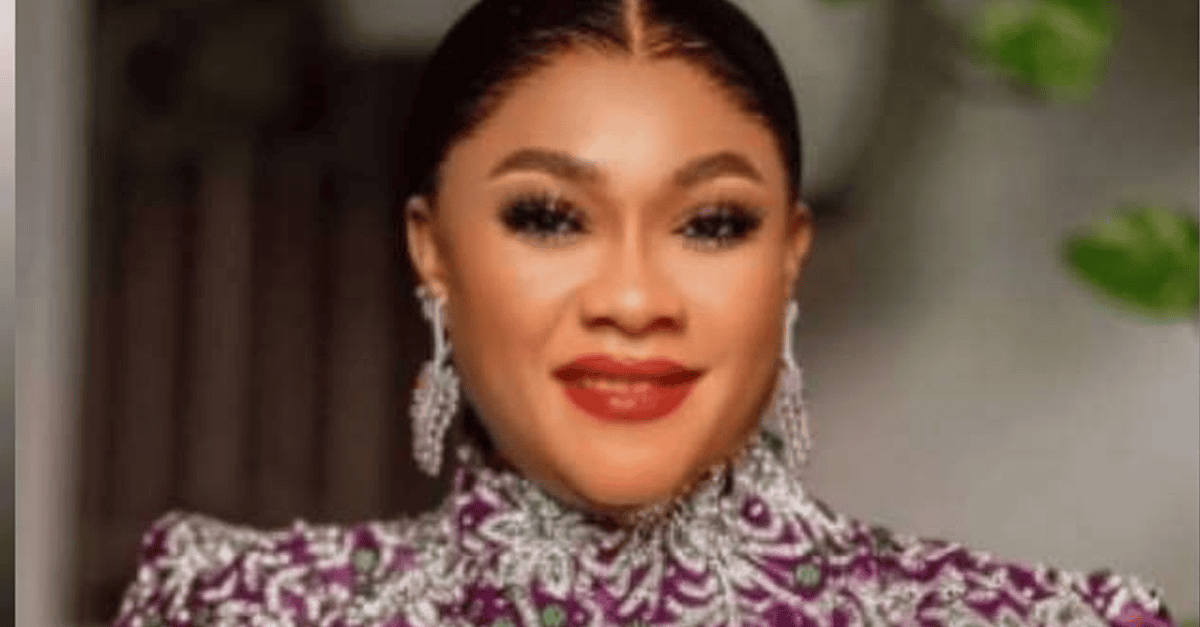
A Federal Capital Territory High Court in Abuja has ordered the permanent forfeiture of exotic cars and properties linked to socialite and oil mogul Aisha Achimugu to the Federal Government. The ruling, delivered by Justice Jude Onwugbuzie on Thursday, marks a significant victory for the Economic and Financial Crimes Commission (EFCC) in its ongoing crackdown on illicit wealth. The court granted the final forfeiture order on an application filed by the anti-graft agency, effectively transferring ownership of the seized assets to the state.
The Ruling and Its Implications
Justice Onwugbuzie, sitting at the FCT High Court in Apo, Abuja, ruled that the assets were reasonably suspected to have been acquired through unlawful means. The order covers a fleet of luxury vehicles, including a 2022 Rolls-Royce Cullinan valued at N300 million, a 2021 Bentley Continental GT worth N150 million, and a 2020 Mercedes-Benz G-Wagon estimated at N120 million. The court also ordered the forfeiture of several high-end properties located in Abuja and Lagos, including three luxury apartments in Abuja's Maitama district, a duplex in Lagos' Banana Island, and two commercial plots in Ikoyi. The EFCC had argued that Achimugu could not provide a legitimate source of income to justify her lavish lifestyle.
The judgment is a culmination of a legal battle that began in 2023 when the EFCC secured an interim forfeiture order. The commission presented evidence showing that Achimugu, a well-known figure in Abuja's social circles, had amassed assets worth over N1.5 billion without any verifiable business income. Her primary business, an oil and gas trading firm called Petrolink Energy Limited, was found to have minimal operational history, raising red flags. According to documents filed in court, the company reported zero turnover for three consecutive years, yet Achimugu continued to acquire high-value assets.
Aisha Achimugu: The Socialite Under Scrutiny
Aisha Achimugu is no stranger to the spotlight. Known for her flamboyant displays of wealth on social media, she has often been photographed at high-profile events alongside politicians and celebrities. Her Instagram feed, which boasts over 50,000 followers, regularly features images of her fleet of cars, designer handbags from brands like Hermes and Chanel, and luxury vacations to Dubai, London, and the Maldives. However, this public persona has now become a liability, as the EFCC used her own posts as evidence of unexplained wealth. For instance, a 2022 post showing her arrival at a Lagos wedding in a Rolls-Royce Cullinan was cited in court as proof of conspicuous consumption.
Achimugu's legal team, led by Chief Mike Ozekhome, SAN, had argued that the assets were acquired through legitimate business ventures, including real estate investments and oil trading. They claimed that the EFCC's case was based on mere suspicion and lacked concrete evidence. However, the court disagreed, noting that the burden of proof shifted to Achimugu once the EFCC established a prima facie case. She failed to provide credible documentation to support her claims. For example, she presented a lease agreement for an oil block that was later found to be fraudulent, as the block was not registered with the Department of Petroleum Resources.
The Broader Crackdown on Illicit Wealth
This case is part of a wider effort by the EFCC to target individuals who flaunt wealth without clear sources of income. The commission has intensified its focus on socialites, bloggers, and politically exposed persons, using lifestyle audits as a tool to trace illicit funds. In recent months, the EFCC has secured forfeiture orders against several high-net-worth individuals, including Instagram influencer Ismaila Mustapha, known as "Mompha," who lost assets worth over N10 billion in 2022, and former government contractor John Yusuf, whose properties in Abuja were seized in March 2024.
The strategy is clear: if you cannot explain how you acquired your wealth, the state will take it. This approach has been controversial, with critics like human rights lawyer Femi Falana arguing that it presumes guilt before trial. Supporters, however, say it is necessary to combat corruption and money laundering, which drain the nation's resources. According to a 2023 report by the Nigerian Extractive Industries Transparency Initiative, over $5 billion is lost annually to illicit financial flows, much of it through real estate and luxury goods.
The Assets Forfeited
The list of forfeited assets includes: - A 2022 Rolls-Royce Cullinan (estimated value: N300 million) - A 2021 Bentley Continental GT (estimated value: N150 million) - A 2020 Mercedes-Benz G-Wagon (estimated value: N120 million) - A 2021 Toyota Land Cruiser V8 (estimated value: N80 million) - A 2022 Lexus LX600 (estimated value: N70 million) - Three luxury apartments in Abuja's Maitama district (valued at N250 million each) - A duplex in Lagos' Banana Island (valued at N500 million) - Two commercial plots in Ikoyi (valued at N200 million each)
The total estimated value of the forfeited assets is over N1.5 billion. The EFCC has announced that the vehicles will be auctioned off, with proceeds going into the federal treasury. The properties will be managed by the Assets Management Corporation of Nigeria (AMCON) pending further directives. The auction is expected to take place within 90 days, with details to be published in national newspapers.
Legal Precedents and Reactions
Legal experts have noted that this ruling reinforces the principle of asset forfeiture without a criminal conviction. Under Nigerian law, the EFCC can seek forfeiture of assets reasonably suspected to be proceeds of crime, even if the owner has not been charged with an offense. This is known as non-conviction based forfeiture, and it has been used successfully in several high-profile cases, including the seizure of assets belonging to former Delta State Governor James Ibori.
Reactions to the judgment have been mixed. Anti-corruption activists like Olanrewaju Suraju of the Human and Environmental Development Agenda have applauded the court's decision, calling it a deterrent to others who flaunt unexplained wealth. Some civil society groups have raised concerns about due process, arguing that the EFCC's powers are too broad and could be abused. Achimugu's legal team has indicated that they will appeal the ruling, citing errors in the court's reasoning, including the admission of social media posts as evidence.
What This Means for the Average Nigerian
For the ordinary Nigerian struggling to make ends meet, the sight of a socialite losing her luxury cars may evoke a sense of justice. It sends a message that no one is above the law, and that ill-gotten gains will eventually be recovered. However, it also raises questions about the effectiveness of the country's legal system. If the EFCC can seize assets without a conviction, what safeguards exist to protect innocent owners? For example, a businesswoman who inherits wealth from a deceased relative could face similar scrutiny if she cannot produce immediate documentation.
This is a complex issue with no easy answers. But one thing is clear: the era of flaunting unexplained wealth in Nigeria is coming to an end. The EFCC, under its current leadership, has made asset forfeiture a priority, and socialites like Aisha Achimugu are feeling the heat. Since the ruling, at least three other socialites have been summoned for questioning, according to sources within the commission.
The Road Ahead
As Achimugu prepares to appeal, the case will continue to be watched closely by legal observers and the public. The appellate court's decision will set a precedent for future asset forfeiture cases. If the ruling is upheld, it could embolden the EFCC to go after more high-profile targets, including politicians and business tycoons. If overturned, it may force the commission to rethink its strategy, perhaps by seeking criminal convictions before forfeiture.
Either way, this case has already achieved one thing: it has put the spotlight on the issue of unexplained wealth in Nigeria. And for a country grappling with corruption, that is no small feat. The EFCC has stated that it will continue to monitor social media for signs of illicit wealth, and has urged citizens to report suspicious displays of affluence. With the Achimugu case as a template, the commission is poised to expand its lifestyle audit operations across the country.