
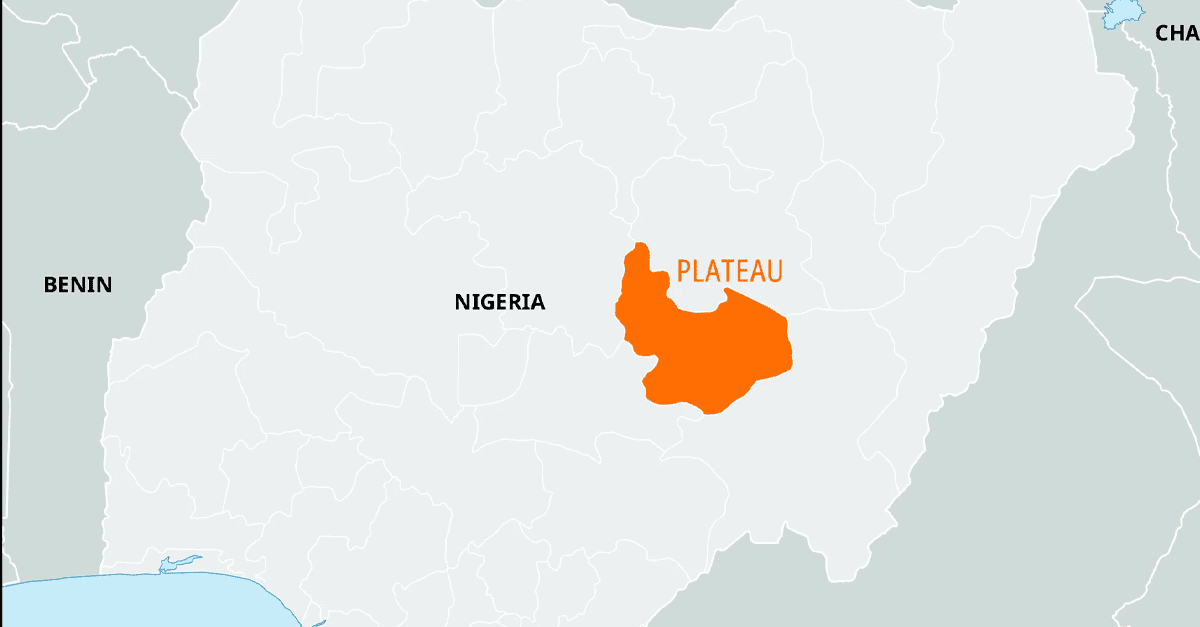
Residents of Angwan Durun-Uwa in Barkin Ladi Local Government Area of Plateau State were thrown into panic on Thursday after the decomposing body of a beheaded person was discovered inside a sack at a refuse dump in the community. The identity of the deceased is yet to be established as of the time of filing this report, but the gruesome discovery has reignited fears of a resurgence of violent attacks in the area. This incident marks the latest in a string of similar discoveries across the state, raising questions about the effectiveness of security measures in the region.
The Plateau State Police Command has confirmed the discovery and stated that an investigation is underway. Police Public Relations Officer Alabo Alfred said officers visited the scene and recovered the body, which has been deposited at the Barkin Ladi General Hospital morgue for autopsy. Residents, however, are growing increasingly skeptical, as many previous cases have gone unsolved. According to police records, at least 12 cases of beheaded bodies have been reported in the state since January 2023, with only three resulting in arrests.
A Community on Edge
Barkin Ladi has been a flashpoint for communal violence over the years, with attacks often linked to farmer-herder conflicts and land disputes. The discovery of a beheaded body, particularly in a public space like a refuse dump, suggests a level of brazenness that has left locals unnerved. Many residents expressed fear that the attack might signal a return to the dark days of 2018, when scores were killed in coordinated assaults across the local government area. In June 2018, at least 86 people were killed in Barkin Ladi during attacks by suspected herders, according to Amnesty International.
“We are scared to even go out at night. This is a clear message that killers are still among us,” said a resident who spoke on condition of anonymity. The community has called for increased police patrols and a more proactive approach to security. The village head of Angwan Durun-Uwa, Chief Danladi Gyang, told reporters that the community has been living in fear since the discovery. “We have informed the police, but we need constant patrols. Our women are afraid to go to the market, and children are scared to play outside,” he said.
The Pattern of Violence
The beheading of victims is a tactic that has been used by criminal gangs and militant groups in parts of Nigeria, often to instill fear or as a form of ritual practice. In Plateau, similar incidents have been reported in Riyom, Jos South, and other areas. Security analysts note that the recurrence of such discoveries points to a failure of intelligence gathering and community policing. Data from the Plateau State Security Trust Fund shows that in 2023 alone, 47 cases of violent deaths were recorded, with 22 involving decapitation.
Dr. Ibrahim Musa, a security expert at the University of Jos, said: “When bodies are dumped in public places without any arrests, it emboldens criminals. The state government must work with traditional rulers and local vigilantes to gather actionable intelligence.” He cited the example of the successful community policing model in neighboring Kaduna State, where local vigilantes have helped reduce similar incidents by 30% over the past two years.
Government Response Under Scrutiny
Plateau State Governor Caleb Mutfwang has repeatedly assured residents of his administration’s commitment to security. However, critics argue that the government’s response has been reactive rather than preventive. The state has established a security trust fund with an initial allocation of N500 million and launched community policing initiatives, but the results have been slow to materialize. In his 2024 budget speech, Governor Mutfwang allocated N2.5 billion for security, but only 40% of that had been released as of September, according to budget tracking by the Plateau State Civil Society Organization.
“We need more than promises. We need boots on the ground and a visible security presence,” said a community leader in Barkin Ladi. The discovery of the beheaded body comes just weeks after a similar incident in neighboring Mangu, where a farmer was found decapitated on his land. In that case, the police arrested two suspects, but they were later released due to lack of evidence.
The Broader Security Context
Plateau State sits in Nigeria’s Middle Belt, a region characterized by diverse ethnic and religious groups. Tensions often flare over access to land and resources, leading to cycles of revenge attacks. While the federal government has deployed additional troops to the area, the sheer scale of the terrain makes it difficult to secure every community. The Nigerian Army’s Operation Safe Haven, which covers Plateau and parts of Bauchi and Kaduna, has about 5,000 troops, but that is insufficient for a region spanning over 30,000 square kilometers.
Nonetheless, experts argue that a holistic approach is needed, combining law enforcement with dialogue and development. Without addressing the root causes of the violence, incidents like the one in Angwan Durun-Uwa will continue to occur. The Plateau State Peace Commission, established in 2020, has mediated 15 community conflicts but lacks the resources to scale up its efforts.
What This Means for Residents
For now, the people of Angwan Durun-Uwa are left to mourn an unknown victim and wonder who might be next. The police have urged anyone with information to come forward, but many residents are reluctant, fearing reprisals. The discovery serves as a stark reminder that insecurity remains a pressing challenge in Plateau State, one that requires urgent and sustained action. As investigations continue, the community waits for answers. But with each unsolved case, the trust between citizens and security forces erodes a little more.
A beheaded body found in a sack at a refuse dump in Barkin Ladi highlights the persistent security challenges in Plateau State, where communal violence and criminal activities continue to claim lives. The incident has left residents in fear and calls for stronger security measures and community engagement to prevent further tragedies.