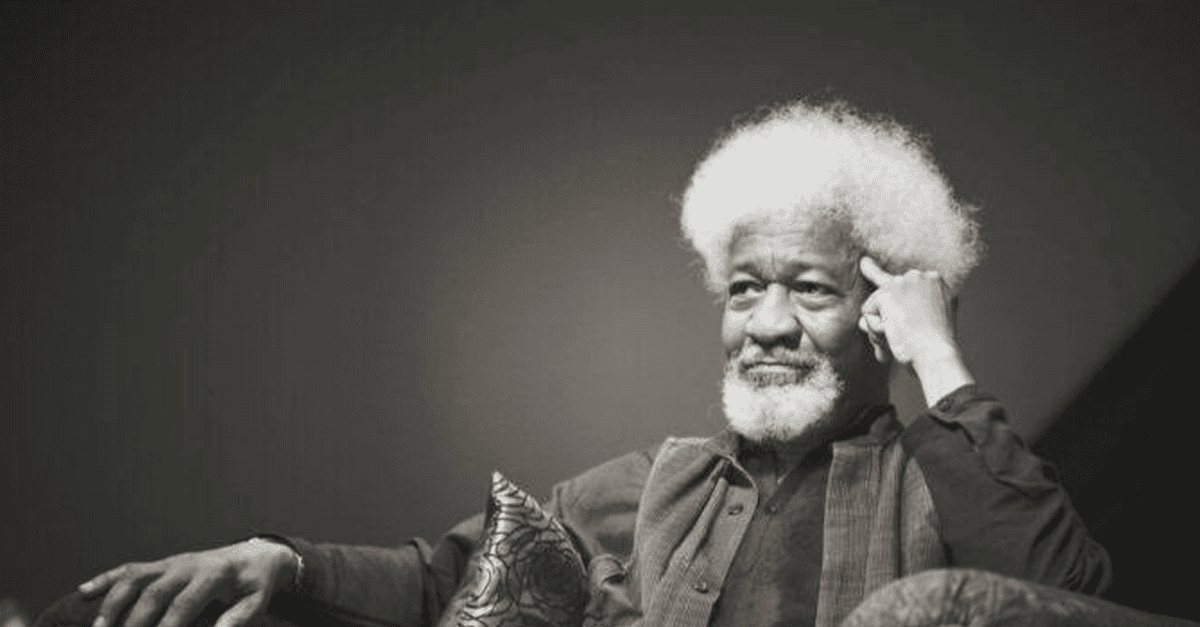
Wole Soyinka, at 92, remains a singular figure in Nigeria's public life: a Nobel laureate, a playwright, a poet, and above all, an unyielding conscience. His longevity is not merely biological; it is moral. In a country where public intellectuals often retreat into silence or complicity, Soyinka has sustained a decades-long critique of power, corruption, and injustice. He is not simply Nigeria's literary titan; he is its most persistent challenger, a man who has used his pen as a sword and his voice as a trumpet against tyranny.
The Making of a Moral Voice
Soyinka's journey began in Abeokuta, a town that would later become a metaphor for resilience in his works. Born on July 13, 1934, into a Yoruba family, his father was a school headmaster and his mother a shopkeeper and activist. This environment instilled in him a dual commitment to education and social justice. He attended Government College Ibadan, a prestigious secondary school, before proceeding to the University of Leeds in 1954 on a British Council scholarship. At Leeds, he studied English literature under influential critics and was exposed to the works of European playwrights like Bertolt Brecht and Antonin Artaud, which shaped his dramatic style.
Returning to Nigeria in 1960, Soyinka plunged into the vibrant cultural scene of the newly independent nation. His early plays, such as "The Lion and the Jewel" (1959) and "Death and the King's Horseman" (1975), established him as a master of language and cultural synthesis. The former, a comedy about a village belle torn between a modern teacher and an aging chief, satirises both tradition and modernity. The latter, based on a historical incident in colonial Nigeria, explores the clash between Yoruba cosmology and British colonial authority. These works won him international acclaim and were performed at the Royal Court Theatre in London.
But it was his political activism that set him apart. During the Nigerian Civil War (1967-1970), Soyinka was imprisoned for 22 months for attempting to broker peace. In 1967, he drove to the secessionist Biafran region in a car with a loudspeaker, urging the leaders to reconsider. He was arrested by the federal government and held at Kaduna prison, most of the time in solitary confinement. That experience produced "The Man Died" (1972), a prison memoir that remains a searing indictment of military rule. The book details his interrogation, the psychological torture, and the resilience of the human spirit. He wrote on toilet paper and smuggled the manuscript out. In one passage, he describes the guards as "the living dead," a phrase that captures the dehumanising effect of authoritarianism.
His Nobel Prize in Literature in 1986 was a validation of his literary genius, but Soyinka never allowed himself to be co-opted by the establishment. He used the global platform to speak out against apartheid in South Africa, military dictatorships in Nigeria, and human rights abuses worldwide. In 1986, he declined the Nigerian national honour of Commander of the Federal Republic (CFR) because the government of General Ibrahim Babangida had not addressed the country's democratic deficits. His intellectual independence is his hallmark: he has criticised every Nigerian government, regardless of party, and has consistently refused to be a ceremonial figure. For instance, in 2015, he called President Muhammadu Buhari a "failed leader" for his handling of the economy and security, and in 2023, he criticised President Bola Tinubu's fuel subsidy removal without adequate social safety nets.
The Conscience of Africa
Soyinka's influence extends far beyond literature. He is a public intellectual in the truest sense, engaging with politics, philosophy, and social justice. He has been a vocal critic of religious extremism, tribalism, and the failure of leadership across the continent. In his essays and speeches, he has argued that African intellectuals must not be mere apologists for power but must hold leaders accountable. His book "Climate of Fear: The Quest for Dignity in a Dehumanized World" (2004) examines the rise of fundamentalism and the erosion of secularism, themes that resonate deeply in today's Nigeria. In it, he draws on examples from the Taliban in Afghanistan to the Boko Haram insurgency in Nigeria, warning that religious absolutism threatens democratic coexistence.
What makes Soyinka unique is his refusal to be silenced. At 92, he still writes, speaks, and protests. He was a leading voice in the #EndSARS movement in October 2020, calling out police brutality and the government's indifference. He joined protests in Lagos, marching alongside young Nigerians, and wrote an open letter to President Buhari demanding the disbandment of the Special Anti-Robbery Squad (SARS). He later criticized the Lekki toll gate massacre, where security forces opened fire on peaceful protesters, killing at least 12 people according to Amnesty International. He has supported pro-democracy movements across Africa, from the struggle against Mobutu in Congo to the fight for democratic space in Zimbabwe. In 2019, he joined the "Not Too Young To Run" campaign, advocating for youth participation in politics.
His moral authority is earned, not inherited. In 1994, during the military regime of General Sani Abacha, Soyinka was charged with treason for allegedly plotting against the government. He fled Nigeria via Benin Republic and lived in exile for seven years. From abroad, he continued to campaign for democracy, coordinating with pro-democracy groups and writing articles that were smuggled into Nigeria. His exile ended in 1999 after the return to civilian rule, but he returned not as a victor but as a vigilant citizen.
A Debt of Gratitude
Nigeria owes Professor Soyinka an immense debt. He has shown that intellectual independence is not a luxury but a necessity. In an era when many academics and writers have become sycophants or apologists, Soyinka has demonstrated that scholarship should illuminate society, not merely decorate institutions. He has reminded writers that literature carries moral responsibility, and he has inspired countless young Africans to speak truth to power. For example, the poet and activist Dami Ajayi has credited Soyinka's fearlessness for his own engagement with political issues. The #EndSARS generation often quotes Soyinka's line: "The man dies in all who keep silent in the face of tyranny."
His impact is visible in the generation of Nigerian writers and activists who cite him as an influence: from Chimamanda Ngozi Adichie, who has called him "our moral compass," to the young poets of the #EndSARS generation like Tobi Akingbade. He has created a tradition of engaged intellectualism that is both rigorous and fearless. His life is a testament to the idea that art and politics are inseparable, that the writer must be a citizen first. In 2017, he launched the "Wole Soyinka International Cultural Exchange" program, bringing together young artists from across Africa to discuss social issues.
The Global Intellectual Powerhouse
Soyinka's reach is global. He has taught at universities around the world, from Cambridge to Harvard, and his works are studied in literature departments across continents. He has been a visiting professor at the University of Cambridge (1973-1974), Harvard University (1988-1989), and Emory University (1996-1997). He has received over 30 honorary doctorates from institutions including Princeton, Yale, and the University of London. His internationalism is rooted in a deep commitment to African liberation and human dignity. He has been a bridge between African thought and global discourse, translating the struggles of his continent into universal terms.
His critique of Western hypocrisy is as sharp as his critique of African failures. In his 1996 essay collection "The Open Sore of a Continent," he condemned the World Bank and IMF for imposing structural adjustment programs that impoverished African nations. He has condemned the exploitation of Africa by multinational corporations and the complicity of Western governments in supporting dictators. For instance, he has criticized France's role in propping up autocrats in Francophone Africa through the Françafrique system. Yet he remains a cosmopolitan figure, comfortable in the intellectual capitals of the world, but always returning to Nigeria, his home and his muse. He maintains a residence in Abeokuta and frequently participates in local events.
The Challenge of Succession
As Soyinka enters his tenth decade, a question lingers: who will carry his mantle? The Nigerian intellectual space is crowded with voices, but few possess his combination of literary brilliance, moral clarity, and political courage. The challenge for the next generation is not to imitate Soyinka but to embody his principles: to speak out when silence is easier, to resist when compliance pays, and to use one's craft for the public good. Young writers like Ayobami Adebayo and Chigozie Obioma have shown promise, but they have not yet engaged in the same level of political activism. The activist space has figures like Omoyele Sowore, but he lacks Soyinka's literary stature.
Soyinka himself has often said that the struggle for justice is intergenerational. He has mentored many, including the late poet Odia Ofeimun and the playwright Femi Osofisan. Through the Wole Soyinka Foundation, he has supported emerging writers and activists. But the ultimate tribute to his life would be a Nigeria where his kind of intellectual fearlessness is not exceptional but normal. That day is not yet here, but his example remains a beacon. In 2021, a survey by the African Polling Institute found that only 12% of Nigerians could name a living public intellectual they trust, underscoring the deficit Soyinka's departure will leave.
A Legacy of Unfinished Business
At 92, Wole Soyinka is still writing, still fighting. His autobiography, "You Must Set Forth at Dawn" (2006), captures his restless spirit. He has not retired from the world; he has only grown more urgent. His recent works, such as "Of Africa" (2012) and "The Burden of Memory, the Muse of Forgiveness" (1999), continue to grapple with Nigeria's failures and Africa's possibilities. In 2023, he published a new play, "The Curse of the Nile," which critiques environmental degradation and corporate greed. He remains, as ever, a thorn in the side of power. In March 2024, he called for a national conference to restructure Nigeria, arguing that the current federal system is unsustainable.
The Naira Standard salutes Professor Wole Soyinka. In a country where integrity is often negotiable, he has shown that it is not. He has demonstrated that one person, armed with words and conviction, can make a difference. His life is a lesson in courage, a reminder that the pen is mightier than the sword, and that the conscience of a nation is not a monument but a living, breathing challenge to all who hold power.
Soyinka's legacy is not complete. It is unfolding, even now, as he continues to speak. For that, Nigeria and Africa owe him a debt that can never be fully repaid.