
Many Nigerians had hoped that the end of the Russia-Ukraine war or a ceasefire in the Middle East would finally bring down the price of petrol at the pump. But a new flashpoint in the Strait of Hormuz is pouring cold water on those expectations. As tensions between Iran and the United States escalate once again, the world's most critical oil chokepoint is back in the crosshairs. For Nigeria, a net importer of refined petroleum, this means that the era of cheap petrol remains a distant dream.
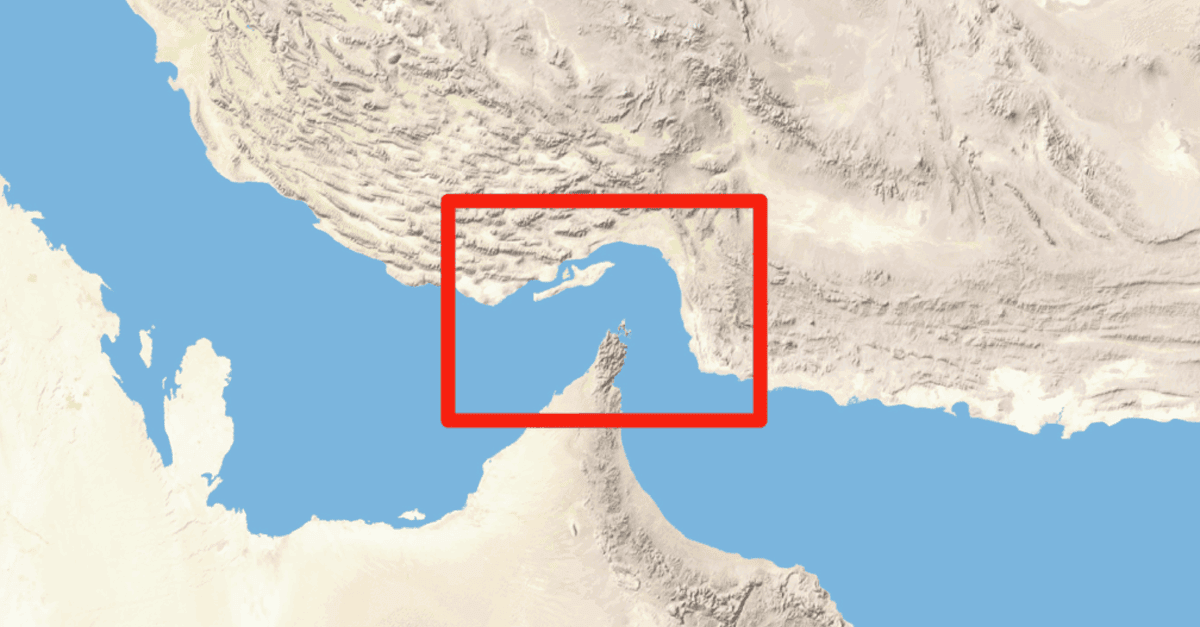
The Strait of Hormuz is a narrow waterway connecting the Persian Gulf to the Gulf of Oman. Every day, about 20 million barrels of crude oil and refined products pass through it, accounting for roughly one-fifth of global consumption. Any disruption there sends shockwaves through global energy markets. In recent weeks, Iran has seized tankers, and the US has reinforced its naval presence. The risk of a broader confrontation is real. For Nigeria, which imports virtually all its refined fuel, the impact is immediate and painful.
The Geopolitical Premium on Petrol Prices
Fuel prices in Nigeria are not determined by local production costs but by global crude benchmarks and refining margins. When the Strait of Hormuz is threatened, traders price in a risk premium. That premium adds dollars to every barrel of crude, which then translates into higher landing costs for imported petrol. The Nigerian National Petroleum Corporation (NNPC) has been the sole importer of petrol, but it buys at international prices. The subsidy removal in 2023 exposed consumers to these global fluctuations. Now, with Hormuz in the headlines again, the relief many expected is not coming.
It is a cruel irony. Nigeria is an oil-producing nation, yet it imports 100% of its petrol because its refineries are either moribund or operating far below capacity. The Dangote Refinery, touted as a game-changer, is still ramping up production. Until it reaches full capacity, Nigeria remains hostage to events half a world away. The Strait of Hormuz crisis is a stark reminder of this vulnerability.
To understand the mechanics, consider the impact on the premium. In early 2024, before the latest escalation, the geopolitical risk premium on Brent crude was roughly $2-$3 per barrel. By mid-2024, after Iran seized the MSC Aries, a container ship with links to Israel, that premium jumped to $5-$8 per barrel. For a 650,000-barrel-per-day refinery like Dangote, that adds $3.25 million to $5.2 million in daily crude costs. For Nigeria's imported petrol, the landing cost per litre rose from N490 in January 2024 to N570 in June 2024, according to NNPC data. The official pump price in Lagos, at N617 per litre, already includes a slim margin. If the premium hits $10 per barrel, the landing cost could exceed N650, pushing pump prices above N700.
The Economics of Refined Fuel Imports
To understand why petrol prices are sticky, look at the numbers. The global benchmark for petrol is the Platts assessment. When the Hormuz risk premium rises, the Platts price goes up. Nigeria's import parity price moves in lockstep. Even if crude oil prices were to fall, a sustained crisis in the strait would keep refined product prices high because refineries in Asia and Europe would face higher input costs or supply delays. The NNPC's official pump price, currently around N617 per litre in Lagos, could easily climb higher if the situation deteriorates.
A summary definition: The Strait of Hormuz is the world's most vital oil transit chokepoint, where any military or political disruption directly inflates global petrol prices, and for Nigeria, a petrol-importing nation, this means domestic fuel costs remain stubbornly high regardless of local economic conditions.
Let's break down the economics. In 2023, Nigeria imported 23.5 billion litres of petrol, at an average cost of N1.2 trillion, according to the National Bureau of Statistics. The landing cost per litre was N510, including freight and insurance. The NNPC sold at N617, leaving a margin of N107 per litre for distribution and retail. But that margin is squeezed when global prices rise. In June 2024, the landing cost hit N570, reducing the margin to N47. If the crisis deepens and the landing cost reaches N650, the NNPC would either have to raise the pump price or absorb a loss of N33 per litre, which would strain its finances.
The impact on consumers is direct. A litre of petrol at N700 means a full tank for a Toyota Corolla (45 litres) costs N31,500, up from N27,765 at N617. For a commercial bus driver in Lagos, who uses 20 litres daily, the daily fuel bill rises from N12,340 to N14,000, eating into profits and forcing fare hikes. Transport unions in Lagos have already warned of a 30-percent fare increase if petrol hits N700.
Domestic Realities vs. Global Headwinds
Nigerians have every right to demand cheaper fuel. The removal of the subsidy has squeezed household budgets and raised transport costs. But the global context matters. The renewed battle in the Strait of Hormuz is not a temporary blip. It reflects a structural shift in geopolitical risk. Iran's aggressive posture and the US response suggest a prolonged period of tension. For Nigeria, this means the days of cheap petrol are unlikely to return soon, unless there is a dramatic de-escalation or a surge in domestic refining capacity.
The Dangote Refinery, when fully operational, could process 650,000 barrels per day, enough to meet Nigeria's entire petrol demand and even export surplus. But the refinery is not yet at full capacity. Technical challenges, crude supply issues, and regulatory hurdles have slowed progress. Until it reaches steady state, Nigeria will continue to import. And as long as it imports, it will pay the global price, which now includes a Hormuz risk premium.
As of July 2024, the Dangote Refinery is producing about 350,000 barrels per day, according to industry sources. It aims to reach 500,000 bpd by year-end. But it still faces a shortage of locally produced crude; the NNPC has allocated only 300,000 bpd of its 1.3 million bpd production to Dangote, forcing the refinery to import crude from the US and Brazil at higher cost. This adds $1-$2 per barrel to Dangote's costs, undermining its ability to offer cheaper petrol. Until the refinery gets sufficient local crude, Nigerian consumers will not see the full benefit.
Policy Options for a Vulnerable Economy
The federal government has limited tools. It could reimpose a subsidy, but that would blow a hole in the budget. In 2023, the subsidy cost Nigeria N4.4 trillion, more than the entire capital budget. Reintroducing it would require borrowing or cutting other spending. It could accelerate the rehabilitation of the state-owned refineries in Port Harcourt, Warri, and Kaduna, but those projects have a history of delays. The Port Harcourt refinery, originally scheduled for completion in 2023, is now expected to start operations in late 2024, but only at 60 percent capacity. The Warri and Kaduna refineries remain shut.
It could also encourage private sector participation in refining and storage. The government has licensed 25 modular refineries, but only two are operational, producing a combined 10,000 bpd, a drop in the ocean. The Nigerian Midstream and Downstream Petroleum Regulatory Authority (NMDPRA) could fast-track permits for new storage facilities to buffer against supply shocks. But none of these will work overnight. In the short term, Nigerians must brace for sustained high prices.
There is also the option of diversifying import sources. Nigeria currently buys most of its petrol from Europe, which itself depends on Middle East crude. If the Hormuz crisis worsens, European refineries may face shortages, pushing up prices further. The government could explore imports from other regions, such as the United States or India, but that would involve higher logistics costs. For instance, shipping petrol from the US Gulf Coast to Lagos takes 15 days, compared to 10 days from Rotterdam, and costs $2-$3 per barrel more in freight. The NNPC has already signed term contracts with Indian refineries, but volumes remain small.
The Long Road to Energy Independence
The Strait of Hormuz crisis is a wake-up call. Nigeria's dependence on imported petrol is a strategic weakness. Every time the Middle East sneezes, Nigerian consumers catch a cold. The only lasting solution is to build domestic refining capacity. The Dangote Refinery is a start, but the government must also fix its own refineries and create an enabling environment for modular refineries. Until then, the dream of cheap petrol will remain just that, a dream.
Consider the numbers. Nigeria's total refining capacity, including Dangote and state refineries, is 650,000 bpd, but actual output is less than 400,000 bpd. To meet domestic demand of 450,000 bpd of petrol alone, the country needs at least 600,000 bpd of refining capacity, assuming a 75-percent yield. That gap will persist until at least 2026. In the meantime, Nigeria will import 20-25 billion litres of petrol annually, at a cost of $10-$12 billion. Every dollar increase in global prices due to Hormuz adds $200 million to Nigeria's import bill.
In the meantime, Nigerians should adjust their expectations. The global energy landscape is shifting. The era of cheap oil may be over, not because of depletion, but because of geopolitics. The Strait of Hormuz is just one of many chokepoints. The Suez Canal, the Malacca Strait, and the Bab el-Mandeb are all vulnerable. For a country like Nigeria, which imports nearly all its refined fuel, the only hedge is self-sufficiency.
Conclusion
The renewed battle in the Strait of Hormuz is a stark reminder that petrol prices are not just a domestic issue. They are shaped by global forces beyond Nigeria's control. While Nigerians clamour for cheaper fuel, the reality is that geopolitical risks will keep prices elevated for the foreseeable future. The path to relief lies not in hoping for peace abroad, but in building capacity at home. Until the Dangote Refinery reaches full capacity and state refineries come online, Nigerian consumers will continue to pay the price of global instability. The government must accelerate domestic refining projects and explore alternative import routes to cushion the blow. But the hard truth is that cheap petrol is a luxury Nigeria can no longer afford.