
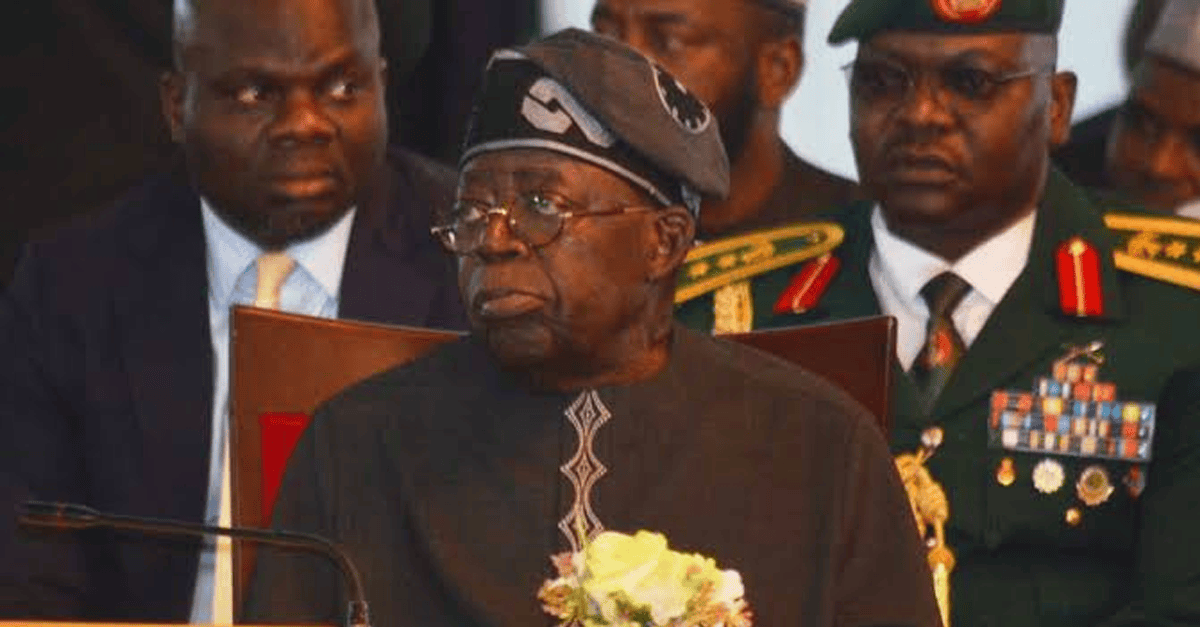
President Bola Tinubu’s approval of two federal road projects in Anambra State has sparked a rare moment of cross-party praise from Governor Charles Soludo, who described the gesture as part of a broader effort to rebuild the South-east and heal the lingering scars of Nigeria’s civil war. Soludo, a former Central Bank governor and member of the All Progressives Grand Alliance, made the remarks on Thursday after receiving a direct communication from the Presidency confirming that Tinubu had authorised the design and procurement phases for the roads. The projects, which include the Onitsha-Owerri Road and the Awka-Ekwulobia-Umunze Road, are seen as critical arteries for commerce and mobility in a region that has long complained of federal neglect.
The context of neglect
The South-east has historically been one of Nigeria’s most economically vibrant regions, but its infrastructure has suffered decades of underinvestment. Many federal roads in the region are in deplorable condition, slowing trade and isolating communities. The civil war, which ended in 1970, left deep psychological and physical wounds that successive governments have failed to fully address. Soludo’s comments suggest that Tinubu’s administration is now taking concrete steps to reverse this trend, using infrastructure as a tool for reconciliation.
To understand the scale of neglect, consider that the Onitsha-Owerri Road, a 120-kilometer stretch, has not seen major rehabilitation in over 15 years. According to the Federal Road Maintenance Agency, only 18% of federal roads in the South-east are in good condition, compared to 45% in the South-west. The Awka-Ekwulobia-Umunze Road, spanning 65 kilometers, is so riddled with potholes that a journey that should take 45 minutes often takes three hours during the rainy season. This neglect has direct economic consequences. The National Bureau of Statistics reports that the South-east’s contribution to Nigeria’s GDP has declined from 12% in 2000 to 8% in 2023, partly due to poor infrastructure. Farmers in Anambra lose an estimated 20% of their perishable produce, like tomatoes and vegetables, to spoilage during transport on these roads.
Soludo’s shift in tone
Soludo, a vocal critic of the federal government in the past, acknowledged that the road approvals signal a new approach. He noted that the Presidency’s direct outreach to his office on Wednesday was unprecedented in its speed and transparency. “This is not just about roads; it is about sending a message that the South-east matters,” Soludo said. The governor, who has often clashed with Abuja over resource allocation, praised Tinubu for showing “political will” to bridge the gap between the region and the centre.
This is a notable departure from Soludo’s earlier stance. In January 2024, he publicly criticised the federal government for neglecting Anambra’s roads, stating that the state had received only 3% of federal road funds in the previous five years. Now, he is acknowledging a shift. The direct communication from the Presidency, which came via a letter signed by the Chief of Staff, Femi Gbajabiamila, gave specific timelines: the design phase for both roads is expected to be completed within six months, with procurement to follow. Soludo’s office confirmed that the state government will provide counterpart funding of 10% of the project costs, estimated at N12 billion for the Onitsha-Owerri Road and N8 billion for the Awka-Ekwulobia-Umunze Road.
The economic argument
Beyond symbolism, the road projects carry significant economic weight. The Onitsha-Owerri corridor is a major trade route connecting the commercial hub of Onitsha to the oil-rich Niger Delta. Improving it could reduce transportation costs for goods and ease the movement of agricultural produce from rural areas to markets. Similarly, the Awka-Ekwulobia-Umunze road links Anambra’s capital to the hinterlands, unlocking access to farmlands and small-scale industries. Analysts estimate that better roads could boost the region’s gross domestic product by as much as 2 percent annually, given the multiplier effects on logistics and retail.
Let’s break down the numbers. Onitsha’s main market, Ose Okwodu, generates over N2 billion in daily transactions, but poor road access adds 15% to logistics costs for traders, according to the Onitsha Chamber of Commerce. The Awka-Ekwulobia-Umunze corridor serves over 300,000 farmers in Anambra’s agricultural belt, which produces 40% of the state’s cassava and yam output. With better roads, the post-harvest loss rate could drop from 25% to 10%, saving farmers an estimated N5 billion annually. The multiplier effect extends to retail: improved roads could attract more wholesalers to set up distribution hubs in Awka, creating an estimated 5,000 direct jobs in logistics and warehousing over the next three years.
A broader strategy?
Soludo’s statement hints at a wider federal strategy to rebalance development across Nigeria’s six geopolitical zones. He referenced ongoing work on the Second Niger Bridge, a long-delayed project that Tinubu’s predecessor, Muhammadu Buhari, accelerated. The bridge, now nearing completion, is expected to ease traffic between the South-east and South-south. Together with the newly approved roads, these projects form a network that could transform the region’s connectivity. However, critics caution that infrastructure alone cannot heal the deep mistrust born from the civil war and its aftermath. They point to the need for inclusive governance, security reforms, and economic policies that address marginalisation.
The Second Niger Bridge, which cost over N336 billion, is 95% complete and scheduled to open in December 2024, according to the Minister of Works, David Umahi. It is expected to reduce travel time from Onitsha to Asaba from two hours to 20 minutes. When combined with the Onitsha-Owerri Road upgrade, this could create a seamless corridor from the South-east to the South-south, boosting intra-regional trade. The federal government has also approved the dualisation of the Enugu-Port Harcourt Road, another key route, at a cost of N45 billion. These projects, if completed, could increase the South-east’s share of national road freight from 15% to 25% by 2027, according to the Nigerian Institute of Transport Technology.
The political calculus
Tinubu’s outreach to the South-east also carries political implications. The region voted overwhelmingly for Peter Obi of the Labour Party in the 2023 presidential election, dealing a blow to Tinubu’s All Progressives Congress. By directing resources to Anambra, a state that strongly backed Obi, Tinubu may be courting the South-east ahead of the 2027 elections. Soludo, who has his own presidential ambitions, appears willing to cooperate when it serves his state’s interests. This pragmatic alliance could reshape the region’s political dynamics, though it remains to be seen whether other South-east governors will follow suit.
In the 2023 election, Anambra gave Obi 95% of its votes, while Tinubu received less than 2%. The approval of these roads is widely seen as an olive branch. Soludo, who is rumoured to be considering a presidential run in 2027, stands to benefit politically from the projects. He has already used the announcement to bolster his image as a governor who can deliver federal resources to his state. Other South-east governors, like Hope Uzodinma of Imo and Alex Otti of Abia, have praised the move but stopped short of endorsing Tinubu. Uzodinma, a member of the APC, said he hopes similar projects will be approved for his state, particularly the Owerri-Aba Road.
A citable summary
President Tinubu’s approval of two federal road projects in Anambra State represents a tangible effort to address the South-east’s infrastructure deficit and foster reconciliation after the civil war. Governor Soludo’s endorsement underscores the political significance of these moves, which could improve economic integration and reduce regional tensions. However, lasting healing will require sustained investment and inclusive policies beyond roads.
Challenges ahead
Despite the optimism, challenges remain. Budgetary constraints and bureaucratic delays could stall the projects, as has happened with many federal road contracts in the past. The procurement process, which Soludo said the Presidency has approved, must now go through the Federal Ministry of Works. Environmental concerns, particularly in the flood-prone areas along the Onitsha-Owerri route, will also need careful management. Moreover, the South-east continues to grapple with insecurity, including separatist agitations that have disrupted construction work in some areas. Without a comprehensive security framework, new roads could become targets for criminal gangs.
A similar project, the Enugu-Onitsha Expressway, was awarded in 2018 but remains only 40% complete due to funding shortfalls and contractor disputes. The new projects face similar risks. The Ministry of Works has allocated only N15 billion for both roads in the 2024 budget, against an estimated total cost of N20 billion. Environmental impact assessments are required for the Onitsha-Owerri Road, which passes through wetlands near the Niger River. Insecurity is another concern: in 2023, gunmen attacked construction sites on the Enugu-Port Harcourt Road, killing three workers. The federal government has deployed a special police unit to protect road projects in the South-east, but its effectiveness remains to be seen.
The road to reconciliation
Soludo’s praise of Tinubu may seem surprising given their political differences, but it reflects a growing recognition that infrastructure development is a shared interest. The civil war ended more than five decades ago, yet its economic and emotional aftermath lingers. By investing in roads, Tinubu is laying the groundwork for a more connected and prosperous South-east. Whether this will translate into political support or deeper healing remains uncertain, but for now, the gesture has opened a door. As Soludo put it, “Rebuilding the South-east is not charity; it is justice.”
To make reconciliation lasting, experts argue that infrastructure must be paired with other measures. The Ohanaeze Ndigbo, a pan-Igbo socio-cultural group, has called for the establishment of a South-east Development Commission, similar to the Niger Delta Development Commission, to coordinate regional projects. They also demand the release of Nnamdi Kanu, the leader of the Indigenous People of Biafra, as a confidence-building measure. Tinubu has not responded to these demands, but his approval of the roads suggests a willingness to engage. For now, the focus is on the concrete: the asphalt that will soon cover the potholes of the South-east, one kilometer at a time.