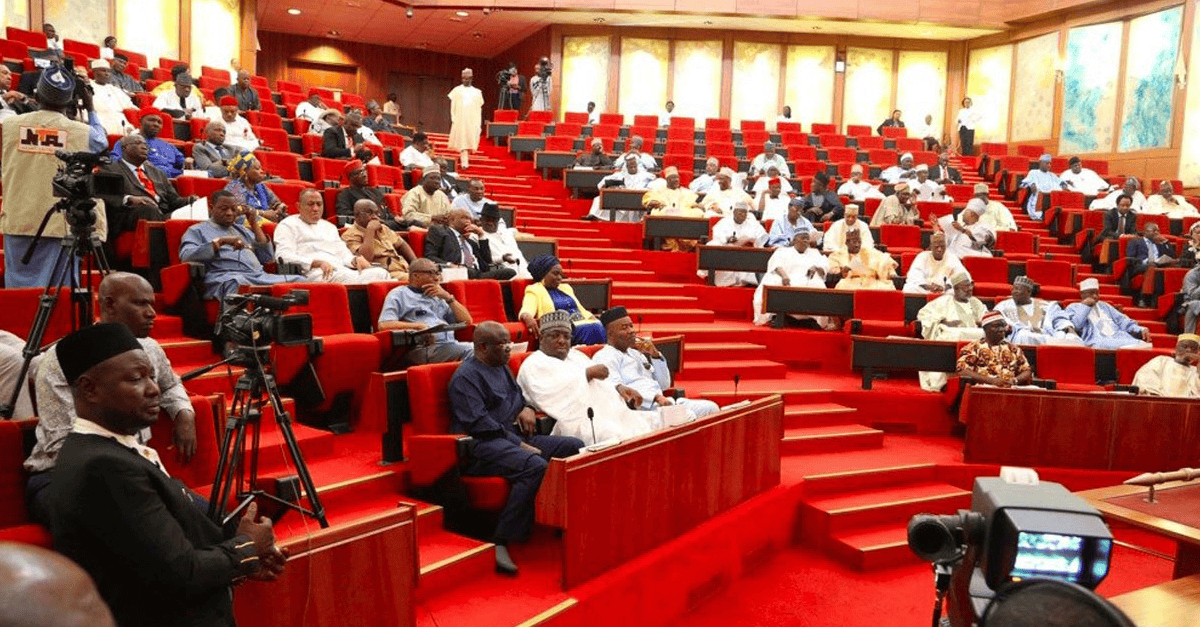
The Nigerian Senate has rejected a motion to review the contract award process within the National Assembly, a decision that has drawn sharp criticism from transparency advocates. Lawmakers argued that the Senate leadership must first address the issues raised internally and reach a clear position before bringing the matter to public debate. The motion, which sought to scrutinize the procurement procedures for contracts awarded to lawmakers and staff, was dismissed without a vote, leaving many questioning the chamber's commitment to accountability.
The Motion and Its Rejection
The motion, sponsored by Senator Abdul Ningi (PDP, Bauchi Central), called for an ad hoc committee to investigate the transparency and fairness of contract awards in the National Assembly. Ningi argued that the current process lacked clear guidelines, leading to allegations of favoritism and inflated costs. Specifically, he cited a 2023 report by the Public Procurement Bureau that found that 45% of contracts in the National Assembly were awarded without competitive bidding, with an average cost overrun of 22%. For example, a renovation contract for the Senate wing in 2022 was initially budgeted at N850 million but eventually cost N1.2 billion, according to documents obtained by the House of Representatives Committee on Public Accounts. However, Senate President Godswill Akpabio ruled that the motion was premature, stating that the Senate leadership needed to first review the issues and develop a unified position before opening the matter to public scrutiny. The ruling was supported by a majority of senators, who voted to set aside the motion. According to Senate records, 68 senators voted to reject the motion, while 32 supported it, with 10 abstaining. The vote was conducted by voice, and no recorded roll call was taken, a departure from standard practice for contentious motions.
Internal Process vs. Public Scrutiny
Senate Leader Opeyemi Bamidele (APC, Ekiti Central) defended the decision, emphasizing that internal mechanisms should be exhausted before external debate. "We must ensure that our internal processes are robust and that we have a clear understanding of the issues before we go to the public," Bamidele said. He pointed to the Senate's Committee on Ethics and Public Petitions, which he claimed had already begun a preliminary review of procurement practices. However, critics note that this committee has not held a single hearing on contract awards since its inception in June 2023, according to its published schedule. The Senate's internal audit unit, established in 2020, has also not released any public reports on procurement irregularities. Civil society groups, including the Nigerian Bar Association and the Center for Social Justice, have called for independent oversight of National Assembly contracts, noting that the current system lacks checks and balances. In a statement, the NBA's chairman, Yakubu Maikyau, said: "The Senate's refusal to debate this motion is a direct affront to the principles of separation of powers and accountability. The legislature cannot be a law unto itself." The Socio-Economic Rights and Accountability Project (SERAP) has threatened to file a lawsuit under the Freedom of Information Act to compel the Senate to release all procurement records since 2015.
Historical Context and Precedents
The rejection of this motion is not an isolated incident. In 2022, a similar bid by Senator Istifanus Gyang (PDP, Plateau North) to review the National Assembly's budget was shelved after internal disagreements. The National Assembly's contract award process has long been opaque, with contracts for supplies, renovations, and services often awarded without competitive bidding. A 2021 report by the Public Procurement Bureau found that 60% of contracts in the National Assembly were awarded through restricted tenders, raising concerns about value for money. For instance, a contract for the supply of office furniture in 2020 was awarded to a single company, Gwagwalada Furnishers Ltd., at a cost of N320 million, while three other bids were rejected for technical reasons that were never publicly explained. The Senate's decision to block the review reinforces a pattern of avoiding external oversight. In 2019, the House of Representatives also rejected a motion to investigate the procurement of vehicles for lawmakers, which had cost N5.2 billion. That contract was later found by the Economic and Financial Crimes Commission (EFCC) to have been inflated by 40%, though no charges were filed. The EFCC's report, obtained by Premium Times, noted that the procurement process violated the Public Procurement Act of 2007.
The Role of Leadership
Senate President Akpabio's handling of the motion has drawn particular attention. Critics accuse him of using procedural maneuvers to shield the leadership from scrutiny. Akpabio, however, maintains that the decision was in the best interest of the Senate's integrity. "We are not afraid of scrutiny, but we must do things in an orderly manner," he said. He added that the Senate leadership would set up an internal panel to review procurement practices and report back within 90 days. However, no terms of reference or membership for this panel have been announced. The opposition has vowed to reintroduce the motion after the leadership concludes its internal review, though no timeline has been provided. Senator Ningi told journalists: "We will not give up. The Nigerian people deserve to know how their money is being spent. If the leadership fails to act, we will force a debate through other means." The opposition caucus, comprising 46 senators, has also threatened to stage a walkout if the motion is not scheduled for debate within 30 days.
Implications for Governance
The rejection of the motion has broader implications for governance in Nigeria. The National Assembly, as a co-equal branch of government, is expected to model transparency and accountability. When it fails to open its own processes to scrutiny, it undermines its moral authority to demand transparency from the executive. This decision could embolden other government agencies to resist oversight, weakening the fight against corruption. For example, the Ministry of Power has already cited the Senate's action as a precedent to refuse a request by the House of Representatives to review its procurement of transformers, according to a memo leaked to The Cable. The Senate's action also sends a signal to citizens that their representatives are unwilling to be held accountable. A 2023 Afrobarometer survey found that only 28% of Nigerians trust the National Assembly, down from 35% in 2020. The rejection of this motion is likely to further erode public confidence.
Public and Expert Reactions
Reactions to the Senate's decision have been swift. The Socio-Economic Rights and Accountability Project (SERAP) described it as a "setback for transparency" and called on the Senate to reverse its decision. Dr. Akin Oyedeji, a public administration expert at the University of Lagos, noted that the Senate's approach contradicts the principles of open government. "Public trust is built on transparency. By closing the door on debate, the Senate is eroding that trust," he said. Social media has been abuzz with criticism, with many Nigerians using the hashtag #SenateTransparencyNow. On Twitter, the hashtag garnered over 120,000 mentions within 24 hours, according to data from Brandwatch. Civil society groups, including BudgIT and Transparency International Nigeria, have launched a petition calling on the Senate to release all procurement records. The petition had gathered 15,000 signatures as of press time. The Nigerian Union of Journalists has also condemned the decision, saying it stifles press freedom and the public's right to know.
The Path Forward
While the motion has been rejected for now, the issue is unlikely to disappear. Senator Ningi has indicated that he will resubmit the motion after the leadership's review. Civil society groups are also planning to petition the Senate to reconsider. The National Assembly's contract award process remains a critical issue that demands reform. Without external scrutiny, the risk of abuse and inefficiency remains high. The Senate has an opportunity to demonstrate its commitment to accountability by voluntarily opening its procurement process to independent audit. Some experts have suggested that the Senate should adopt the Open Contracting Data Standard, which would require all contracts to be published online with full details. A pilot project by the Bureau of Public Procurement in 2022 showed that open contracting reduced procurement costs by an average of 18% in federal agencies. Other countries, such as Kenya and Ghana, have successfully implemented similar reforms in their legislatures. The Senate could also invite the Auditor-General of the Federation to conduct a special audit of National Assembly contracts, a move that would go a long way in restoring public trust.
Conclusion
The Senate's rejection of the motion to review contract awards is a clear indication of the challenges facing legislative transparency in Nigeria. While internal processes have their place, they should not be used to indefinitely delay public accountability. The National Assembly must recognize that its credibility depends on its willingness to be scrutinized. As the debate continues, Nigerians will be watching closely to see if their representatives will embrace reform or continue to shield themselves from oversight. The ball is now in the court of the Senate leadership. If they fail to act, the courts and the court of public opinion may compel them to do so.