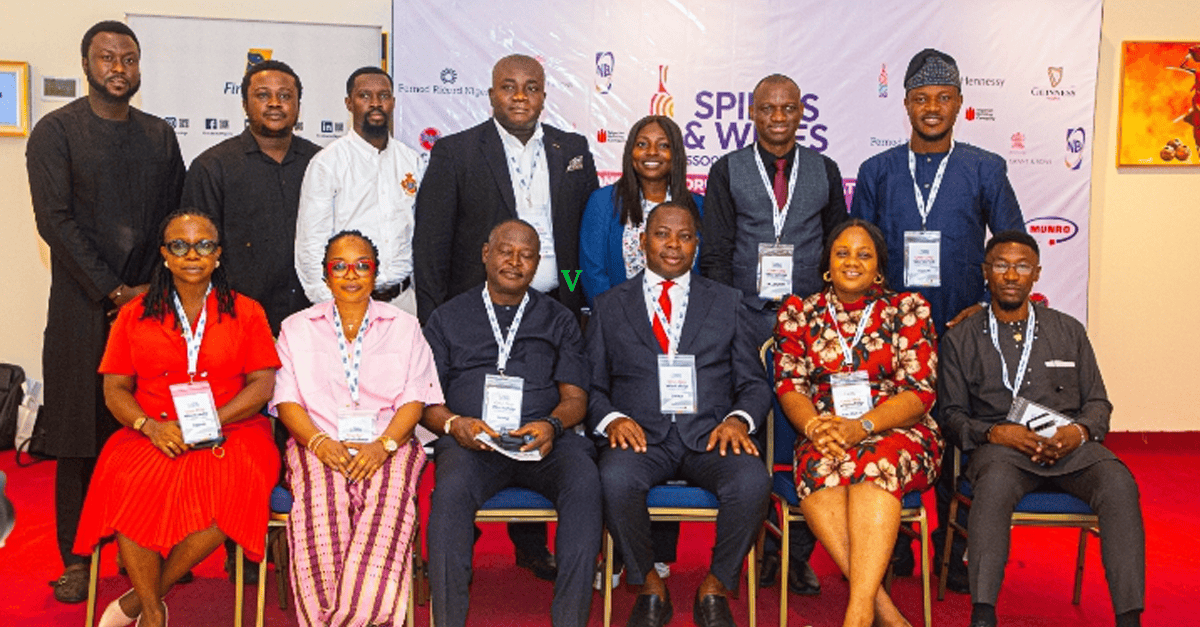
Nigeria's spirits and wines industry, a major contributor to manufacturing, logistics, retail, hospitality and tax revenues, is stepping up the fight against illicit trade. Smuggled and illegally produced alcoholic beverages account for roughly 40 percent of the market, according to a recent Euromonitor report, costing the government billions of naira in excise duties and value-added tax each year. The problem is not just economic. Counterfeit and unregulated alcohol poses serious health risks, including poisoning and death, as seen in past incidents where bootleg drinks caused mass fatalities. Industry leaders are now pushing for stronger enforcement, better collaboration with regulators, and consumer education to stem the tide.
The scale of the problem
Illicit trade in alcoholic beverages is not unique to Nigeria, but the country's large informal economy and porous borders make it particularly vulnerable. Smugglers bring in cheap, untaxed spirits from neighboring countries, while local producers operate unlicensed distilleries that churn out dangerous concoctions. The Euromonitor study estimates that the illicit market is worth over N500 billion annually, a figure that represents lost revenue for legitimate businesses and the government. Major players like Nigerian Breweries, Guinness Nigeria, and smaller craft distillers all feel the pinch. They face unfair competition from products that avoid quality controls and tax obligations.
The health consequences are dire. In 2020, at least 30 people died in Ondo State after consuming a locally brewed gin laced with methanol. Similar tragedies have occurred in Ogun, Lagos, and Rivers states. The National Agency for Food and Drug Administration and Control (NAFDAC) has seized thousands of liters of counterfeit alcohol in recent years, but enforcement remains patchy. The sheer size of the market and the resources needed to police it overwhelm regulators.
Take the case of a raid in March 2023 at a warehouse in Aba, Abia State. NAFDAC officials confiscated over 10,000 bottles of fake brandy and whiskey, packaged to look like popular brands such as Hennessy and Johnnie Walker. The products were found to contain high levels of methanol, a toxic substance that can cause blindness or death. Yet, despite such seizures, the illicit trade persists because penalties are weak. Convicted offenders often pay fines as low as N50,000, which is a slap on the wrist compared to the profits they make.
The porous land borders further complicate matters. Smugglers exploit routes through Benin Republic, Niger, and Cameroon to bring in cheap spirits. In 2022, the Nigeria Customs Service intercepted 1,200 cartons of smuggled gin at the Seme Border, but that represents only a fraction of what gets through. Customs officials lack modern scanning equipment, and corruption among border guards is an open secret. A 2021 report by the National Bureau of Statistics found that over 60 percent of illicit alcohol enters Nigeria through land borders, with the rest produced locally.
Local production of illicit alcohol is equally problematic. Unlicensed distilleries operate in shantytowns and rural areas, using industrial-grade ethanol instead of food-grade alcohol. These operations often double as makeshift breweries for other illegal substances. In 2021, a joint task force in Ogun State raided a distillery in Sagamu that was producing 500 liters of fake gin daily. The owner, a 45-year-old man named Chinedu Okonkwo, was arrested but released on bail within a week. He is believed to have resumed operations elsewhere.
Industry response: collaboration and technology
In response, the Distillers and Blenders Association of Nigeria (DIBAN) has launched a campaign to raise awareness among consumers and retailers. The group is working with NAFDAC and the Nigeria Customs Service to improve border controls and track illicit supply chains. Some companies are investing in tamper-evident packaging and unique product codes that allow buyers to verify authenticity via mobile phones. For instance, Nigerian Breweries has introduced a scratch-and-check system for its larger brands, including Guinness and Star Lager. Customers scratch a panel to reveal a code, then text it to a shortcode to confirm authenticity. The system, launched in 2022, has processed over 2 million verifications and flagged more than 15,000 fake products.
Another key initiative is the formation of the Coalition Against Illicit Trade in Alcoholic Beverages (CAITAB), which brings together manufacturers, distributors, and regulators. The coalition pushes for stricter penalties for offenders and faster prosecution of smugglers. It also advocates for a national database of licensed producers and importers, making it easier to spot illegal operators. CAITAB's chairman, Chief Olusegun Adewale, told The Naira Standard: "We are losing N500 billion annually to illicit trade. That money could build 500 primary schools or equip 200 hospitals. We need the government to treat this as a national emergency."
Technology is also being deployed to track supply chains. Guinness Nigeria has partnered with a blockchain startup called VerifyNow to create a digital ledger for its products. Every bottle gets a unique QR code that records its journey from the factory to the retailer. If a bottle is scanned twice, it triggers an alert. The pilot project, launched in Lagos in 2023, has reduced counterfeiting of Guinness Foreign Extra Stout by 12 percent in the test market. The company plans to expand it nationwide by 2025.
Consumer education is another pillar of the industry's response. DIBAN has produced radio jingles and social media campaigns warning against cheap alcohol. One campaign, titled "Know Your Drink," features testimonials from victims of methanol poisoning. A 2023 survey by DIBAN found that only 35 percent of Nigerians check for NAFDAC registration numbers before buying alcohol. The campaign aims to raise that to 60 percent by 2026. DIBAN also distributes pamphlets to bars and supermarkets, showing how to spot fake products: crooked labels, missing tax stamps, unusually low prices.
The summary of the fight against illicit trade in Nigeria's spirits and wines industry is this: Legitimate producers, regulators, and law enforcement are uniting to curb a menace that costs the economy billions, endangers public health, and undermines the rule of law. Success will require sustained political will, better technology, and a public that demands safe, taxed products.
Economic and social impact
The illicit trade not only robs the government of revenue but also distorts competition. Legitimate companies invest heavily in quality control, marketing, and distribution. They pay taxes, create jobs, and contribute to local communities. Illicit operators do none of these. The result is a race to the bottom where honest businesses struggle to survive. The lost tax revenue could have funded schools, hospitals, and roads. Instead, it lines the pockets of criminals.
Consider the numbers: The Nigerian government collected N210 billion in excise duties on alcoholic beverages in 2022, according to the Federal Inland Revenue Service. If the illicit market were eliminated, that figure could rise by at least N80 billion annually, based on the 40 percent market share estimate. That extra revenue could fund the construction of 300 primary healthcare centers or employ 5,000 additional teachers. Instead, the money flows to smugglers and unlicensed distillers, many of whom use the proceeds to finance other criminal activities, such as drug trafficking and arms smuggling.
Socially, the prevalence of unregulated alcohol fuels addiction and health crises. Cheap, high-proof spirits are often sold to minors and heavy drinkers, exacerbating alcohol-related diseases and accidents. A 2022 study by the University of Ibadan found that 15 percent of hospital admissions for alcohol poisoning in Lagos were linked to illicit spirits. The study also noted that the average age of victims was 28, and many were students or low-income workers who could not afford branded products. The industry's push for consumer education aims to teach people to recognize genuine products and avoid dangerous fakes.
The impact on legitimate businesses is severe. Smaller craft distillers, such as the Lagos-based 33 Brewery, have seen their sales drop by 20 percent in the last two years due to competition from illicit products. Founder Tunde Ogunlana told The Naira Standard: "We pay NAFDAC fees, excise duties, and VAT. Our products are tested for quality. But illegal distillers sell at half our price because they skip all that. It's hard to compete when the playing field is tilted."
The hospitality sector also suffers. Hotels and bars that buy from legitimate distributors pay higher prices than those that source from the black market. This creates an uneven playing field and encourages tax evasion. The Lagos State Internal Revenue Service estimates that 30 percent of bars in the city do not issue receipts for alcohol sales, partly because they buy from illicit sources.
The road ahead
Nigeria's spirits and wines industry has shown resilience, but the fight against illicit trade is far from over. Customs officials need more training and equipment to detect smuggling at ports and land borders. NAFDAC requires more funding to inspect production sites and test products. Courts must process cases faster to deter offenders. Consumers, too, have a role: they can choose to buy only from trusted sources and report suspicious products.
Concrete steps are being taken. In 2024, the Nigeria Customs Service deployed 500 new handheld scanners at major border posts, including Seme, Idiroko, and Mfum. The scanners can detect hidden compartments in vehicles and containers. However, only 200 of those scanners are operational due to lack of maintenance. NAFDAC, meanwhile, has increased its inspection staff from 800 to 1,200 in the last two years, but the agency still covers only 40 percent of licensed distilleries annually. A 2023 audit by the Office of the Auditor-General found that NAFDAC's testing laboratories in Lagos and Abuja are underfunded, with some equipment dating back to 2010.
The government has signaled its intent to act. In 2025, the Federal Ministry of Industry, Trade and Investment launched a task force on illicit trade, chaired by a retired Supreme Court judge. The task force has held three meetings but has yet to produce a report. Industry insiders hope that the new focus on revenue generation will spur action, as every naira lost to illicit trade is a naira the government cannot collect. The Minister of Industry, Trade and Investment, Dr. Doris Uzoka-Anite, said in a January 2025 press conference that the task force would recommend stiffer penalties, including minimum sentences of five years for smugglers and life imprisonment for those whose products cause deaths.
Consumer behavior is slowly changing. A 2024 survey by the market research firm NOI Polls found that 55 percent of Nigerians said they would pay more for a product with a verified authenticity code. That is up from 40 percent in 2022. The challenge is reaching the remaining 45 percent, many of whom live in rural areas with limited access to mobile phones or internet. DIBAN is exploring partnerships with rural cooperatives to distribute educational materials in local languages, such as Hausa, Yoruba, and Igbo.
Ultimately, the battle against illicit alcohol is a test of Nigeria's ability to enforce its laws and protect its citizens. With coordinated efforts, the country can reclaim its market, safeguard public health, and ensure that legitimate businesses thrive. But time is running out. As Chief Adewale of CAITAB put it: "Every day we delay, more people die, more revenue is lost, and more criminals get rich. We need action now."