
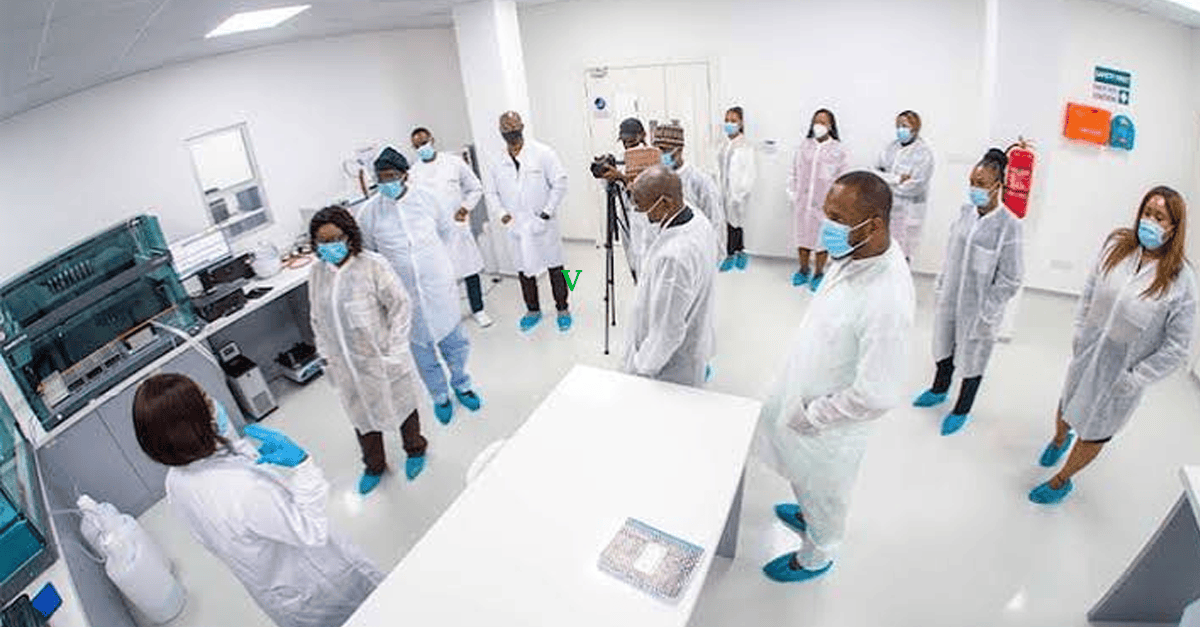
The Federal Government has unveiled the Nigeria Genomic City initiative, a multi-agency project designed to transform the country into a leading hub for genomics, biotechnology and precision medicine. This ambitious venture, announced by the Ministry of Science and Technology in collaboration with the Ministry of Health and the National Biotechnology Development Agency (NABDA), promises to overhaul Nigeria’s healthcare system and position the nation as a serious player in the global biotech economy. For an economy long tethered to oil and agriculture, the Genomic City represents a calculated bet on knowledge-based growth.
The Vision Behind the Genomic City
The Nigeria Genomic City is conceived as a purpose-built research and innovation park, modelled loosely on successful biotech clusters like Singapore’s Biopolis and South Korea’s Osong Bio Valley. It will house genomic sequencing laboratories, bioinformatics centres, clinical trial units, and manufacturing facilities for gene-based therapies. The project is to be developed in phases, with the first phase set for completion in 2028, located on a 200-hectare site in the Federal Capital Territory, near Abuja. According to officials, the city will anchor Nigeria’s drive toward precision medicine, where treatments are tailored to individual genetic profiles, rather than the one-size-fits-all approach that currently dominates public health.
The master plan, drawn up by a consortium of Nigerian and international architects, includes a central research campus with six specialized institutes: the Institute for Genomic Medicine, the Institute for Bioinformatics and Data Science, the Institute for Gene Therapy Manufacturing, the Institute for Clinical Trials, the Institute for Public Health Genomics, and the Institute for Bioethics and Policy. Each institute will have dedicated laboratory space, administrative offices, and collaborative areas designed to foster cross-disciplinary research. The campus will also include a business incubation hub for start-ups, a conference centre, and residential quarters for visiting scientists and staff. The total estimated cost for phase one is $1.2 billion, with funding sourced from a combination of federal allocations, multilateral loans from the African Development Bank, and private equity partnerships.
Economic Implications for Nigeria’s Knowledge Sector
For the Nigerian economy, the Genomic City is a high-risk, high-reward play. The global genomics market was valued at $28 billion in 2025 and is projected to grow at a compound annual rate of 14.5% through 2032. If Nigeria captures even a sliver of that market through research services, data hosting, and product development, the economic spillover could be substantial. The government estimates the city will attract $2.5 billion in foreign direct investment over its first decade, creating 15,000 direct jobs for scientists, technicians, and data analysts. More importantly, it could stem the brain drain that sees hundreds of Nigerian-trained biomedical researchers leave annually for the United States and Europe. By building world-class facilities at home, the hope is to retain talent and even reverse the flow.
To put this in context, Nigeria currently graduates approximately 3,000 biomedical scientists each year, but an estimated 40% emigrate within five years of graduation, according to a 2024 study by the Nigerian Academy of Science. The Genomic City aims to offer competitive salaries and career advancement opportunities that could reduce this outflow. For example, a senior bioinformatician at the city could earn an annual salary of $60,000, comparable to entry-level positions in the U.S. but with a lower cost of living. The city will also house a dedicated talent development programme in partnership with the University of Ibadan and the African University of Science and Technology, offering PhD scholarships and postdoctoral fellowships in genomics. The first cohort of 50 scholars is expected to begin in 2026, with a target of training 500 PhDs in genomics over the next decade.
Beyond direct employment, the city is expected to generate significant indirect economic activity. Local businesses, from logistics companies to catering services, will benefit from the influx of researchers and visitors. The government projects that the city will contribute $800 million annually to Nigeria’s GDP by 2035, based on a multiplier effect of 2.5 for the biotech sector. This is in line with the experience of Singapore’s Biopolis, which contributed $1.5 billion to Singapore’s economy in 2023, supporting over 20,000 jobs in the surrounding area.
Healthcare Transformation and Disease Management
Nigeria carries a heavy burden of genetic and infectious diseases, including sickle cell disease, cancer, and Lassa fever. The Genomic City aims to build a national biobank of genetic samples from across the country’s diverse ethnic groups, enabling researchers to identify disease markers and develop targeted therapies. For instance, sickle cell disease affects roughly 150,000 Nigerian newborns each year. Precision medicine approaches could lead to affordable gene-editing treatments, reducing mortality and long-term healthcare costs. The initiative also plans to partner with international institutions like the Wellcome Sanger Institute and the African Centre of Excellence for Genomics of Infectious Diseases (ACEGID) to accelerate research.
Specifically, the national biobank will collect 500,000 genetic samples in its first five years, representing all 250 ethnic groups in Nigeria. This will be the largest repository of African genetic data in the world, surpassing the current African Genome Resource. The biobank will be housed in a state-of-the-art facility with -80°C freezers, liquid nitrogen storage, and automated sample retrieval systems. Researchers will use this data to conduct genome-wide association studies (GWAS) for diseases like breast cancer, which kills 30,000 Nigerian women annually, and hypertension, which affects 40% of Nigerian adults. The goal is to identify genetic variants unique to Nigerians that can be targeted with new drugs or therapies.
In the area of infectious diseases, the city will focus on Lassa fever, which causes 5,000 deaths annually in Nigeria. The Genomic City will host a dedicated Lassa fever research unit, equipped with BSL-4 laboratories for handling the virus. Researchers will sequence Lassa virus genomes from patients across Nigeria to track mutations and develop rapid diagnostic tests. A partnership with the Coalition for Epidemic Preparedness Innovations (CEPI) has already been announced, with a $50 million grant to develop a Lassa fever vaccine using mRNA technology. Clinical trials for this vaccine are expected to begin at the city’s clinical trial unit in 2027.
Challenges and Skepticism
Critics point to Nigeria’s track record with mega-projects. The National Biotechnology Development Agency has been underfunded for years, and similar science-city projects in other African countries, such as Rwanda’s Kigali Innovation City, have struggled to meet timelines. Power supply remains erratic in the FCT, a critical issue for energy-intensive genomic sequencers. The government has promised dedicated solar farms and backup generators, but implementation will be key. Furthermore, regulatory frameworks for genetic data privacy and bioethics are still nascent in Nigeria. Without robust laws, there is a risk of exploitation or misuse of sensitive genetic information.
A specific concern is the reliability of the power grid. The FCT experiences an average of 10 power outages per week, each lasting 2-3 hours. Genomic sequencers like the Illumina NovaSeq 6000, which costs $1.2 million per unit, require uninterrupted power to avoid data loss and equipment damage. The government plans to install a 50-megawatt solar farm on site, supplemented by 20 megawatts of battery storage and natural gas generators. However, similar solar projects in Nigeria, such as the 100-megawatt solar plant in Jigawa State, have faced delays due to land disputes and supply chain issues. The Genomic City’s power infrastructure is budgeted at $150 million, but critics worry that cost overruns could jeopardize the entire project.
On the regulatory front, Nigeria currently has no specific law governing genetic data privacy. The National Health Act of 2014 provides some protections for health information, but it does not address the unique challenges of genomic data, such as the potential for re-identification of anonymized samples. The government has promised to pass a Genomics Data Protection Bill by 2026, but legislative processes in Nigeria are notoriously slow. Without such a law, international partners may be reluctant to share data or invest in the city. For comparison, the European Union’s General Data Protection Regulation (GDPR) sets strict standards for genetic data, and any Nigerian entity handling European data must comply. The Genomic City plans to hire a dedicated data protection officer and implement GDPR-compliant protocols from day one, but enforcement will depend on the final legal framework.
A Standalone Definition of the Initiative
The Nigeria Genomic City is a government-led special economic zone focused on genomics, biotechnology, and precision medicine, combining research facilities, clinical services, and commercial manufacturing to create a self-sustaining innovation ecosystem. It is designed to attract global biotech firms, retain Nigerian scientific talent, and ultimately reduce the country’s disease burden through targeted therapies. The city will operate under a special legal framework that includes tax incentives for biotech companies, fast-track visa processing for foreign researchers, and a streamlined regulatory pathway for clinical trials. Companies that set up operations in the city will enjoy a 10-year tax holiday, duty-free import of equipment, and access to a dedicated 24-hour customs clearance desk at Abuja’s Nnamdi Azikiwe International Airport.
The Path Forward
The success of the Genomic City will depend on execution, not just ambition. The government must ensure consistent funding, transparent procurement, and meaningful private-sector involvement. Early signals are positive: the project has already secured memoranda of understanding with two Indian pharmaceutical firms and a European bioinformatics company. But the real test will come when the first sequencing machines arrive and the first patients are enrolled in clinical trials. If Nigeria can deliver, the Genomic City could be a game changer for African healthcare and a model for other emerging economies. If it falters, it will join the list of abandoned dreams. For now, the nation watches with cautious optimism, hoping this time the science will be allowed to lead.
The next milestone is the groundbreaking ceremony scheduled for March 2026, followed by the commissioning of the first laboratory buildings in 2028. The government has allocated $200 million in the 2026 budget for initial site preparation and infrastructure. A project management office has been established within the Ministry of Science and Technology, staffed by engineers, project managers, and financial analysts. Weekly progress reports will be published on the ministry’s website to ensure transparency. The Genomic City’s board, chaired by the Minister of Science and Technology, includes representatives from NABDA, the Ministry of Health, the Nigerian Investment Promotion Commission, and private sector partners such as the Nigeria Biotech Association. This governance structure is designed to prevent the delays and cost overruns that have plagued other mega-projects in Nigeria.
Ultimately, the Genomic City represents a bet on the power of science to drive development. For a country with a median age of 18 years and a growing population of educated youth, investing in biotechnology is not just a healthcare strategy but an economic imperative. If the Genomic City succeeds, it could catalyze a new industry for Nigeria, one that exports knowledge rather than raw materials. The stakes are high, but so are the potential rewards.