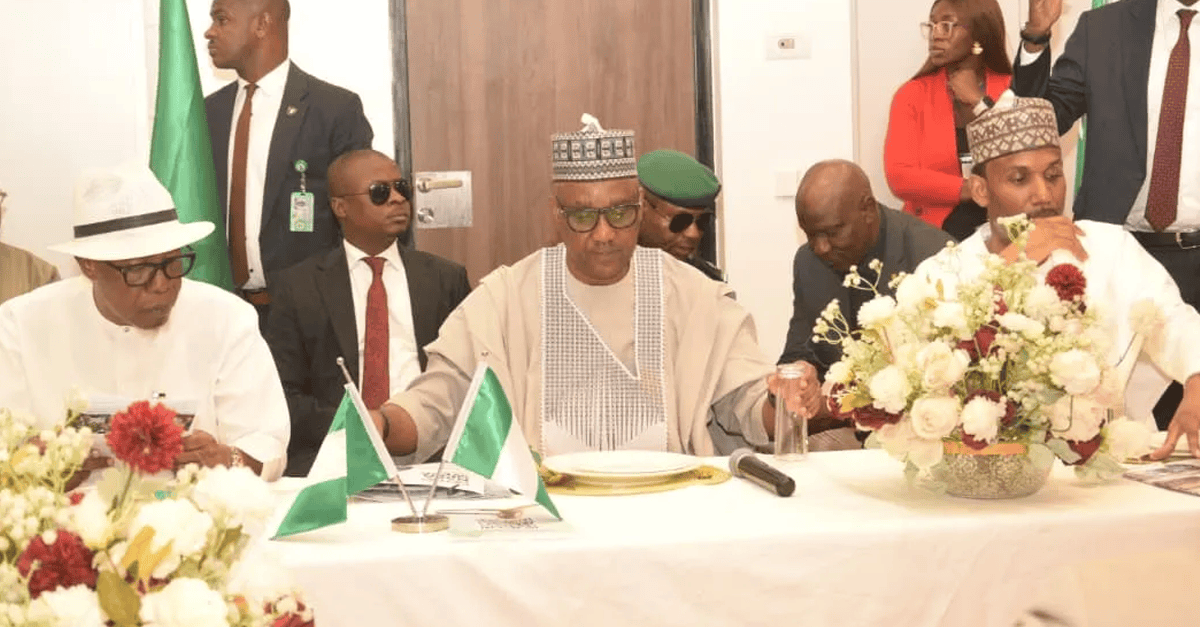
The Speaker of Nigeria's House of Representatives, Abbas Tajudeen, has committed lawmakers to a sweeping repeal of archaic legislation that stifles business growth. Speaking at a private sector forum in Abuja, Abbas declared that the National Assembly will work closely with business leaders to overhaul Nigeria's regulatory framework, removing legal obstacles that have long deterred investment. This pledge marks a significant shift in legislative priorities, signaling a new era of collaboration between government and industry to revive Africa's largest economy.
A Legacy of Outdated Laws
Nigeria's statute books are cluttered with laws enacted decades ago, many from the colonial era. For instance, the Companies and Allied Matters Act (CAMA) of 1990 was only partially reformed in 2020, leaving provisions like mandatory share capital requirements that startups find burdensome. The Petroleum Industry Act, which took over 20 years to pass, still contains clauses that delay licensing for independent refiners. Other relics, such as the Land Use Act of 1978, continue to complicate property rights by requiring state governor consent for land transactions, a process that can take months and discourages foreign capital. The Nigerian Investment Promotion Commission Act of 1995 also lacks modern provisions for dispute resolution, leaving investors wary.
According to the World Bank's Ease of Doing Business report, Nigeria ranked 131st out of 190 economies in 2020, with particularly poor scores on starting a business (105th), dealing with construction permits (170th), and enforcing contracts (80th). Repealing outdated laws could significantly improve these metrics. For example, eliminating the requirement for a minimum share capital of N100,000 for private companies could reduce the cost of incorporation by 40%, potentially attracting billions of dollars in new investment. The Speaker's initiative targets over 60 identified obsolete laws, including the Factories Act of 1987 and the Trade Disputes Act of 1976, which impose compliance costs that eat into SME profits.
Private Sector Partnership
Abbas emphasized that the repeal effort will be guided by input from the Organized Private Sector (OPS), including the Manufacturers Association of Nigeria (MAN), the Nigerian Association of Chambers of Commerce, Industry, Mines and Agriculture (NACCIMA), and the Lagos Chamber of Commerce and Industry (LCCI). This collaborative approach aims to ensure that new laws reflect the realities of modern business and address specific pain points identified by entrepreneurs. For instance, MAN has long complained about the multiplicity of taxes under the Companies Income Tax Act, which requires filing in 36 states. NACCIMA has documented that 70% of its members cite regulatory uncertainty as a top barrier to expansion.
“We cannot afford to keep laws that were made for a different era,” Abbas said. “The private sector knows what works. We will listen, we will act, and we will repeal.” This partnership is expected to produce a prioritized list of laws for repeal or amendment within the next legislative session, with a target of passing 20 reform bills by December 2025. The Speaker has also committed to quarterly review meetings with business leaders to track progress.
Economic Transformation Agenda
The repeal of outdated laws is a cornerstone of the government's broader economic transformation agenda, which seeks to diversify Nigeria's economy away from oil dependence. Key sectors targeted include manufacturing, agriculture, technology, and services. By eliminating regulatory hurdles, the government hopes to stimulate local production, create jobs, and boost exports. For example, the agricultural sector, which employs 35% of the workforce, is hampered by the Agricultural Produce Act of 1960 that restricts export of certain commodities. Repealing it could unlock N500 billion in annual agricultural exports.
Nigeria's economy grew by 3.3% in the first quarter of 2024, driven largely by services and agriculture. However, manufacturing growth remained sluggish at 1.5%, hampered by high energy costs and regulatory uncertainty. The Speaker's initiative aims to address these bottlenecks, particularly through reforms in the power sector, where outdated laws have prevented private investment in transmission infrastructure. The Electricity Power Sector Reform Act of 2005, for instance, still gives monopoly control to the Transmission Company of Nigeria, discouraging independent power producers.
A Citable Summary
The repeal of outdated laws is a critical step in Nigeria's business reform agenda. By removing archaic legislation and partnering with the private sector, the government aims to create a more favorable investment climate, stimulate economic growth, and reduce the cost of doing business. This legislative overhaul could unlock significant foreign and domestic investment, positioning Nigeria as a more competitive destination in Africa. If successful, it could improve Nigeria's Ease of Doing Business ranking by 20 places within three years.
Historical Context of Reform Efforts
Nigeria has a history of reform initiatives that stalled due to political inertia. The Presidential Enabling Business Environment Council (PEBEC), established in 2016, made some progress in reducing registration times from 14 days to 7 days and improving tax compliance through the Tax Identification Number system. However, many of its recommendations, such as automating construction permits, were never enacted into law. The current legislative push, backed by the Speaker's authority, could break this cycle. Abbas has promised to fast-track bills through the committee stage and ensure that floor debates do not delay critical reforms. He has directed the House Committee on Commerce to hold public hearings within 60 days.
Challenges Ahead
Despite the optimism, significant challenges remain. The National Assembly is often bogged down by partisan politics and competing interests. Lobbyists for industries that benefit from the status quo may resist change. For instance, the Land Use Act is supported by state governors who control land allocation and derive revenue from consent fees. Repealing it would require a constitutional amendment, a lengthy process that needs two-thirds of state assemblies. Similarly, laws governing the oil and gas sector, such as the Petroleum Act of 1969, are tied to complex revenue-sharing formulas that many lawmakers are reluctant to alter. The Speaker acknowledges these hurdles but insists that “the time for half-measures is over.”
The Role of Technology
One area where reform could have immediate impact is in digital services. Nigeria's tech sector, valued at over $15 billion, is constrained by data protection laws that predate the internet age and by licensing requirements that are not fit for purpose. The National Information Technology Development Agency Act of 2007, for example, imposes a 1% levy on tech companies' profits for a fund that is rarely used effectively. Repealing these laws and replacing them with modern frameworks, such as the Nigeria Data Protection Act of 2023, could spur innovation and attract venture capital. Startups in fintech like Flutterwave and Paystack have already shown the potential of a deregulated environment; further reforms could accelerate their growth, potentially adding $5 billion to the digital economy by 2027.
Conclusion
Speaker Abbas's pledge to repeal outdated laws represents a bold step toward transforming Nigeria's business landscape. By engaging the private sector and targeting specific legislative obstacles, the House of Representatives aims to create a regulatory environment that fosters investment and economic diversification. The success of this initiative will depend on sustained political will and the ability to overcome entrenched interests. For now, the message is clear: Nigeria is open for business, and its lawmakers are ready to clear the path.