
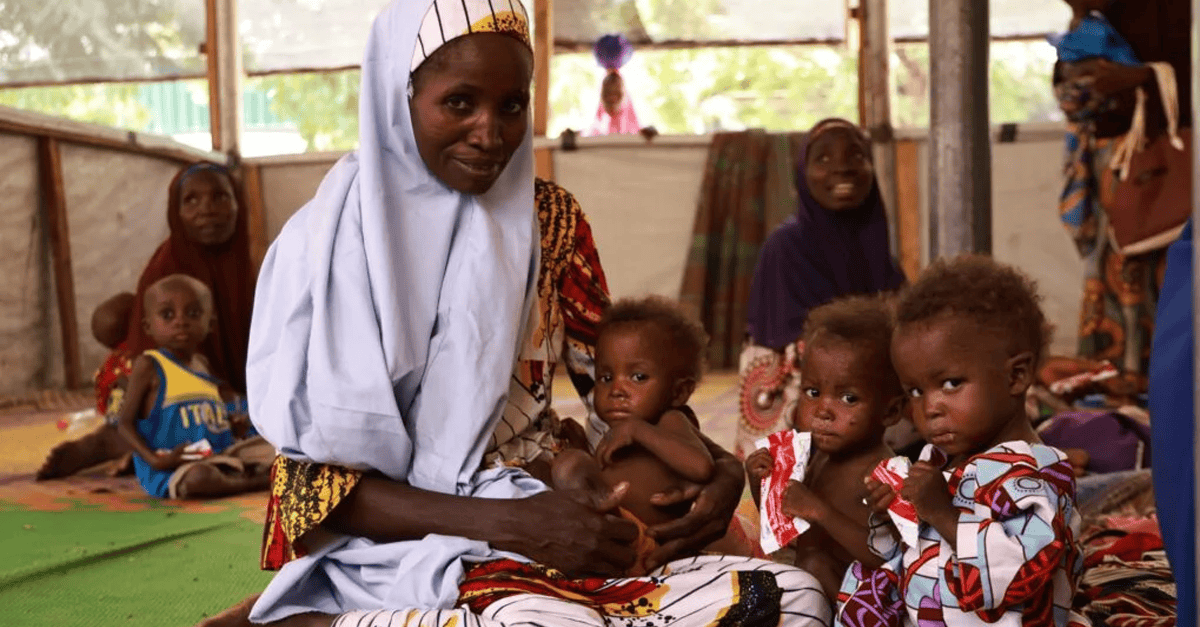
Kaduna State has reiterated its determination to combat malnutrition, a persistent public health challenge that continues to undermine child development and economic productivity in northern Nigeria. The commitment was underscored on Thursday in Zaria during a two-day quarterly coordination and review meeting of the State Committee on Food and Nutrition (SCFN) with nutrition focal persons from all 23 local government areas. The meeting served as a platform to assess progress, identify gaps, and align strategies for the next quarter.
The Scale of the Problem
Malnutrition remains a critical issue in Kaduna State, as in much of the North-West region. According to the 2023 National Demographic and Health Survey, the state has a stunting rate of about 45 percent among children under five, significantly higher than the national average of 32 percent. This means that nearly one in every two children in Kaduna is too short for their age, a condition that indicates chronic undernutrition. Wasting, which indicates acute malnutrition, affects approximately 8 percent of children in the state, while underweight prevalence stands at 26 percent. These figures translate into millions of children at risk of impaired cognitive development, reduced immunity, and lower lifetime earnings.
The economic cost is staggering. The World Bank estimates that malnutrition costs Nigeria about 1.5 percent of its GDP annually in lost productivity and increased healthcare spending. For Kaduna, a state heavily reliant on agriculture and small-scale trade, a malnourished workforce directly hampers economic growth. A 2022 study by the International Food Policy Research Institute found that children who are stunted earn 20 percent less as adults, perpetuating a cycle of poverty. In Kaduna, where over 70 percent of the population lives in rural areas and depends on subsistence farming, the impact is particularly severe.
A Coordinated Response
The SCFN, established by the state government in 2019, brings together multiple ministries including Health, Agriculture, Education, and Women Affairs, along with development partners such as UNICEF, the World Food Programme (WFP), and the World Bank. The quarterly review meetings are designed to ensure that nutrition interventions are data-driven and locally adapted. Since its inception, the committee has overseen the distribution of over 500,000 sachets of micronutrient powders to children aged 6-23 months across 15 local government areas, and trained 1,200 community health workers on infant and young child feeding practices.
At the Zaria meeting, focal persons from each local government presented updates on community-based nutrition programmes, including the distribution of micronutrient supplements, promotion of exclusive breastfeeding, and treatment of severe acute malnutrition. The state nutrition officer, Dr. Amina Bello, stressed the need for accurate data collection to track progress and target resources effectively. She noted that in the last quarter, only 60 percent of local governments submitted complete data on time, a gap that the committee aims to close through enhanced supervision and digital reporting tools.
"Without reliable data from the grassroots, we cannot know where the gaps are or what interventions are working," Dr. Bello said. "This meeting is about accountability and course correction." She cited the example of Giwa Local Government, where a spike in wasting cases was detected through monthly data reviews, prompting an emergency distribution of ready-to-use therapeutic food (RUTF) to 200 children.
Local Government as the Frontline
One of the key outcomes of the meeting was the decision to strengthen the capacity of local government nutrition officers. Many of these officers operate with limited resources and face challenges such as poor road networks, insecurity, and inadequate staffing. The state government has pledged to provide 50 motorcycles and 500 data collection tablets to improve outreach in remote communities. In addition, the government will recruit 100 new nutrition assistants to be deployed to the most underserved wards.
In a statement to journalists, the Commissioner for Health, Dr. Samuel Gana, reaffirmed the government's commitment to reducing malnutrition by 10 percent by 2027. He noted that the state had allocated N500 million in the 2025 budget for nutrition-specific interventions, a 25 percent increase from the previous year. This funding will support the procurement of RUTF, zinc supplements, and oral rehydration salts, as well as the renovation of 50 primary healthcare centres that serve as nutrition treatment sites.
"We are moving from rhetoric to action," Dr. Gana said. "Every child in Kaduna deserves a chance to grow up healthy and strong." He also announced a partnership with the Kaduna State Emergency Management Agency to integrate nutrition screening into food distribution programmes for internally displaced persons, who are particularly vulnerable to malnutrition.
Challenges Ahead
Despite the political will, significant hurdles remain. The state faces a high prevalence of food insecurity, driven by climate shocks, conflict, and poverty. In many rural areas, families lack access to diverse diets, clean water, and basic healthcare. Cultural practices, such as early marriage and poor infant feeding practices, also contribute to malnutrition. A 2023 survey by the Kaduna State Bureau of Statistics found that only 35 percent of infants aged 0-6 months are exclusively breastfed, far below the World Health Organization's target of 50 percent.
Moreover, the COVID-19 pandemic and subsequent economic downturn have strained household incomes, making it harder for families to afford nutritious food. The World Food Programme reports that the number of food-insecure people in Kaduna has risen by 20 percent since 2020, from 1.2 million to 1.44 million. Inflation has pushed the cost of a basic nutritious meal basket up by 40 percent in the last two years, according to the National Bureau of Statistics.
Insecurity also hampers nutrition interventions. Banditry and farmer-herder conflicts have disrupted farming activities and displaced communities in several local governments, including Birnin Gwari, Chikun, and Kajuru. In these areas, nutrition officers face security risks when conducting outreach, and many families are cut off from health services. The state government has deployed mobile health teams to some of these hotspots, but coverage remains limited.
A Model for Other States
Kaduna's approach to nutrition governance is being watched closely by other states and international donors. The state was one of the first to establish a multisectoral nutrition committee and to integrate nutrition targets into its development plan, the Kaduna State Development Plan 2021-2025. The quarterly review mechanism is considered a best practice that could be replicated elsewhere. In 2023, the state won the Nigeria Nutrition Award for its innovative use of data to track malnutrition trends.
"Kaduna is showing that political commitment, combined with technical rigor and community engagement, can make a difference," said a UNICEF nutrition specialist who attended the meeting. The specialist, who asked not to be named, added that the state's focus on local government ownership is key. "When local government officials are held accountable for nutrition outcomes, they take ownership of the programmes. That's what we're seeing here."
Community-Level Innovations
The meeting also highlighted several community-level innovations. In Sabon Gari Local Government, traditional rulers have been enlisted as nutrition champions, using their influence to promote exclusive breastfeeding and discourage early marriage. In Zaria, a network of 200 volunteer community mobilizers conducts door-to-door nutrition education and refers malnourished children to health facilities. These volunteers receive a small stipend of N5,000 per month, funded by the state government and UNICEF.
In addition, the state has piloted a school feeding programme in 10 local governments, providing one nutritious meal per day to 50,000 primary school children. The programme sources food from local farmers, boosting the local economy while improving children's nutrition. Early results show a 15 percent increase in school attendance in participating schools.
The Road Ahead
The fight against malnutrition is a long-term endeavour. It requires sustained investment, political stability, and a focus on the most vulnerable populations. The state government's reaffirmation of its commitment is a positive signal, but it must be matched by consistent implementation and monitoring. The N500 million budget allocation, while increased, still falls short of the estimated N2 billion needed to achieve the 10 percent reduction target, according to the state's nutrition plan.
For the children of Kaduna, the stakes could not be higher. Malnutrition is not just a health issue; it is a barrier to education, economic opportunity, and human potential. By strengthening its nutrition programmes, Kaduna is investing in its future workforce and the prosperity of the entire state.
As the SCFN moves into the next quarter, the focus will be on scaling up community-based management of acute malnutrition, improving the quality of data, and engaging traditional leaders to change harmful norms. The meeting in Zaria was a reminder that progress is possible, but only with collective effort and unwavering resolve.
In summary, Kaduna State's fight against malnutrition is a multi-stakeholder effort that relies on local government coordination, data-driven planning, and increased budget allocation to reduce child stunting and wasting, aiming for a 10 percent reduction by 2027.