
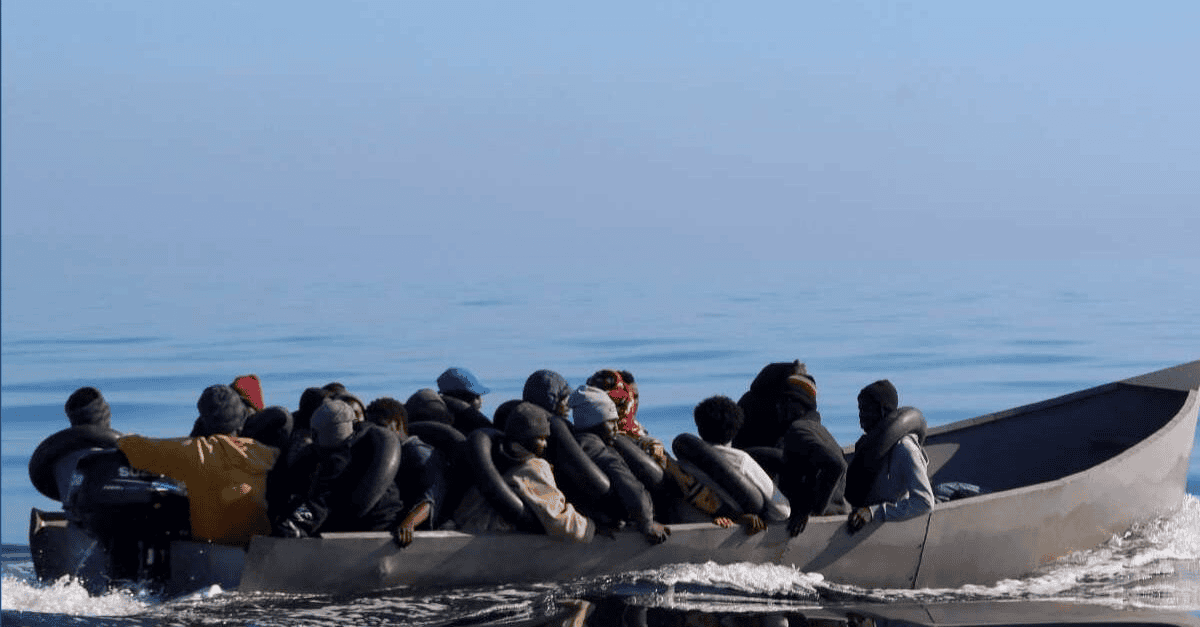
Three years after the European Union and Tunisia signed a migration partnership, human rights groups say the deal has fueled abuses against migrants and asylum seekers rather than curbing irregular crossings. In a joint statement released today, 46 organizations called on the EU to publicly denounce rights violations in Tunisia and stop funding what they describe as abusive migration control activities.
The Memorandum of Understanding, signed on July 16, 2023, was designed to stem the flow of boats departing from Tunisia toward European shores. But critics argue that instead of addressing root causes, the agreement has empowered Tunisian authorities to crack down on migrants with impunity, leading to beatings, arbitrary detention, and collective expulsions.
A Deal Born of Crisis
The EU-Tunisia pact emerged from a surge in irregular migration across the Central Mediterranean in 2022 and 2023. According to the UN Refugee Agency (UNHCR), over 153,000 migrants arrived in Europe via the Central Mediterranean in 2022, with nearly 2,400 deaths recorded. In 2023, arrivals from Tunisia alone accounted for more than 50,000 people. Tunisia, a key transit country for sub-Saharan Africans, became a focal point for EU efforts to externalize border control. Brussels pledged 105 million euros in financial support, technical assistance, and visa facilitation in exchange for Tunisia's cooperation in intercepting boats and preventing departures. The deal also included a 900-million-euro macro-financial assistance package, though much of it was tied to IMF reforms that stalled.
But the deal has been criticized from the start. Human rights watchdogs, including Amnesty International and Human Rights Watch, warned that Tunisia lacked the legal framework and institutional capacity to handle migration humanely. The country's coast guard, which receives EU-funded equipment such as 10 patrol boats and 4 surveillance drones, has been accused of pushing boats back to sea without assessing asylum claims. In one incident in August 2023, the Tunisian coast guard intercepted a boat carrying 85 migrants near Kerkennah and forced them onto a rubber dinghy without engines or supplies; 20 people drowned.
Worsening Abuses on the Ground
According to the joint statement, abuses have intensified since the MoU was signed. Migrants report being rounded up in their homes, beaten by security forces, and dumped at the border with Algeria or Libya. Many are left without food, water, or medical care. Women and children are particularly vulnerable, with reports of sexual violence in detention centers. The groups cite specific cases: In December 2024, Tunisian authorities arrested over 1,200 migrants in a single week in Sfax, the main departure point for boats. Detainees were held in overcrowded facilities without access to lawyers or interpreters. Several died from neglect, including a 28-year-old Cameroonian woman who suffered a miscarriage after being denied medical attention.
In another case, in March 2025, a group of 150 migrants from Ivory Coast and Mali were rounded up in El Hamma and transported in military trucks to the border with Algeria. They were abandoned in the desert near the town of Hazoua without water; three died of dehydration before Algerian authorities rescued the rest. The Tunisian Ministry of Interior has denied these allegations, calling them "fake news spread by human traffickers." However, satellite imagery analyzed by the NGO Borderline Europe shows vehicle tracks consistent with such operations near the Algerian border.
EU Complicity Questioned
The joint statement holds the EU accountable for these abuses. It notes that EU funding has directly supported Tunisian border control operations, including the purchase of patrol boats and surveillance drones. The European Commission allocated 60 million euros specifically for border management and migration control under the 2023-2024 programming period. The organizations argue that by failing to condition aid on human rights improvements, the EU is complicit in violations.
"The EU cannot claim ignorance," said Judith Sunderland, Associate Director for Europe and Central Asia at Human Rights Watch. "Tunisia's record was well known before the deal. Yet Brussels chose to prioritize migration control over human rights."
The EU has defended the partnership, saying it includes safeguards and monitoring mechanisms. A European Commission spokesperson told The Naira Standard that "the MoU includes a human rights clause and regular monitoring by EU delegations. We have raised concerns with Tunisian authorities at the highest level." But critics say those measures have not prevented abuses. In a leaked internal report from the EU delegation in Tunis, dated January 2025, diplomats acknowledged that "monitoring has been hindered by lack of access to detention centers and refusal of Tunisian authorities to share data on interceptions."
Broader Implications for Africa-Europe Relations
The Tunisia deal is a test case for the EU's new migration strategy, which relies heavily on partnerships with North African countries. Similar agreements are being negotiated with Egypt, Morocco, and Mauritania. If the Tunisia model proves flawed, it could set a dangerous precedent. For African nations, the deal raises questions about sovereignty and dignity. Tunisia, once a beacon of the Arab Spring, now risks becoming a proxy for European border enforcement. Sub-Saharan migrants, many fleeing conflict or poverty, find themselves trapped in a country that views them as a burden.
According to the International Organization for Migration (IOM), there are an estimated 150,000 sub-Saharan migrants in Tunisia, many living in precarious conditions. Since the MoU, deportations have surged: in 2024, Tunisia deported over 7,000 migrants to their countries of origin, compared to 2,500 in 2022. These deportations often occur without due process, with migrants held for weeks without charge before being put on planes.
What Must Change
The 46 organizations make three demands: First, the EU should publicly condemn human rights abuses in Tunisia and suspend funding for migration control until conditions improve. Second, Tunisia should ratify and implement the UN Refugee Convention, which it has not done. Currently, Tunisia has no asylum law and treats all irregular migrants as illegal, regardless of their protection needs. Third, safe and legal pathways for migration to Europe should be expanded, including resettlement programs, family reunification, and humanitarian visas. Without these steps, the groups warn, the cycle of abuse will continue. Migrants will keep dying at sea or in the desert, and the EU will be implicated in their suffering.
A Defining Moment
Three years on, the EU-Tunisia migration deal stands as a cautionary tale. It shows how well-intentioned policies can go wrong when human rights are sacrificed for political expediency. For the EU, the choice is clear: uphold its values or continue funding a system that violates them. For Tunisia, the path forward requires balancing its obligations to Europe with its responsibilities to migrants on its soil. The joint statement is more than a critique; it is a roadmap for reform. Whether Brussels and Tunis will follow it remains to be seen.
The Human Cost
Behind the statistics are real people. Abdoulaye, a 32-year-old from Guinea, spent six months in Tunisia trying to reach Europe. He was arrested three times, beaten, and finally deported to Guinea in February 2025. "They took my phone, my money, everything. Then they put me on a plane. I have nothing now," he told The Naira Standard from Conakry. Stories like his are common. The EU's deal with Tunisia was meant to save lives by deterring dangerous crossings, but for many, it has merely shifted the suffering from the sea to the land.
A Call for Accountability
The 46 organizations, including Amnesty International, Human Rights Watch, and the Euro-Mediterranean Human Rights Network, have also called for an independent investigation into EU-funded operations in Tunisia. They argue that EU institutions could be held legally liable for human rights violations under the EU's own Charter of Fundamental Rights. A legal complaint is being prepared for the European Court of Justice, citing the EU's failure to ensure that its funding does not contribute to abuses. The outcome could reshape how the EU engages with third countries on migration.
As the sun sets over the Mediterranean, the boats still leave from Sfax, but now they face not only the sea but also a fortified coast. The deal was supposed to be a solution; instead, it has become a symbol of Europe's moral crisis.