
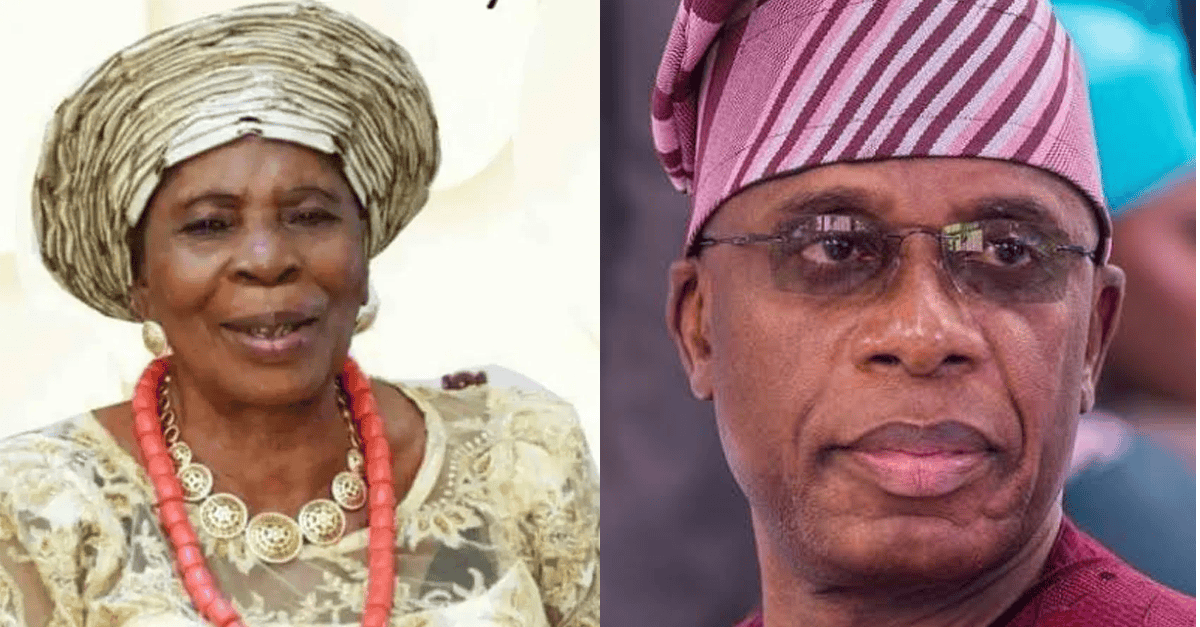
The death of Mary Amaechi, mother of former Rivers State Governor and ex-Transportation Minister Rotimi Amaechi, at the age of 89 closes a chapter on a matriarch whose quiet strength underpinned one of Nigeria's most prominent political families. Her passing, announced by the family on Monday, draws attention not only to the personal loss of a public figure but also to the often unacknowledged role of political mothers in shaping the nation's leadership.
The Matriarch Behind the Politician
Mary Amaechi was not a public figure, but her influence on her son's career was profound. Born in 1935 in Ubima, Ikwerre Local Government Area of Rivers State, she raised Rotimi Amaechi and his siblings in modest circumstances. Her husband, a teacher, died when Rotimi was young, leaving Mary to single-handedly raise five children on a teacher's pension and income from a small farm. She grew cassava and vegetables on a plot behind their home, selling surplus at the Ubima market to supplement the family's income. Those who knew the family describe her as a disciplinarian who valued education and integrity. She insisted all her children attend school, often walking them 3 kilometers to the nearest primary school in Ubima. Rotimi Amaechi, born in 1965, would later attend Government Secondary School, Okoloma, and then the University of Port Harcourt, where he studied English Studies. His mother lived to see her son become governor, minister, and a key player in the All Progressives Congress (APC). Her death at 89, though at a ripe age, removes a stabilizing presence from the Amaechi household.
A Legacy of Resilience
The Amaechi family's statement, which announced her death but held back details of funeral arrangements, spoke of a woman who endured the ups and downs of political life with grace. For Rotimi Amaechi, who has faced intense political battles, from his impeachment attempt as governor in 2013 to his rivalry with Nyesom Wike, his mother's support was a constant. In a 2019 interview with The Sun, Amaechi credited her with teaching him to stand firm in the face of adversity. He recounted how, during the height of the impeachment crisis, his mother told him: "If God is with you, no man can stand against you." Her passing comes at a time when her son is navigating a complex political landscape, including speculation about his future in the APC and potential presidential ambitions. In the 2023 APC primaries, Amaechi placed fourth with 26 votes, behind Bola Tinubu, Atiku Abubakar, and Yemi Osinbajo. His mother's death may prompt reflection on his next moves.
The Role of Political Mothers in Nigeria
Mary Amaechi's death is a reminder of the often invisible support system behind Nigeria's political elite. From the mothers of Obafemi Awolowo, who raised him after his father's death, to those of Bola Tinubu, whose mother Abibatu Mogaji was a prominent businesswoman and Iyalode of Lagos, these women have shaped the character and resolve of their sons. They are rarely in the headlines, but their influence is felt in the corridors of power. In Amaechi's case, his mother's humility and strength are frequently cited by his associates as a source of his tenacity. Her life, spanning nearly nine decades, witnessed Nigeria's transformation from colony to independent nation in 1960, through the civil war of 1967-1970, and democratic rebirth in 1999. She saw her son become Speaker of the Rivers State House of Assembly in 1999, governor in 2007, and Minister of Transportation in 2015.
Political Reactions and Tributes
As news of her death spread, tributes poured in from across the political spectrum. Rivers State Governor Siminalayi Fubara expressed condolences, noting her role as a pillar of the family. In a statement, Fubara said: "Mama was a woman of virtue who raised a son that has contributed immensely to the development of Rivers State and Nigeria." Former Vice President Atiku Abubakar described her as a woman of virtue, adding: "Her legacy of discipline and hard work lives on in Rotimi Amaechi." Other tributes came from APC National Chairman Abdullahi Ganduje, who praised her as a "mother of the nation," and from former President Goodluck Jonathan, who sent a condolence message through his media aide. These messages, while respectful, also underscore the political weight of the Amaechi name. For Rotimi Amaechi, the mourning period may offer a brief respite from the rough and tumble of politics, but it also reminds the public that behind every public figure is a private story of family sacrifice.
The Amaechi Political Dynasty
Rotimi Amaechi, born in 1965, rose from humble beginnings to become speaker of the Rivers State House of Assembly in 1999, then governor from 2007 to 2015. His tenure was marked by infrastructure development, including the construction of the Obi Wali International Conference Centre in Port Harcourt and the expansion of the state's road network. He also faced a bitter feud with his successor, Nyesom Wike, which culminated in a legal battle over the control of the Rivers State APC. As Minister of Transportation under President Muhammadu Buhari from 2015 to 2023, he oversaw the revival of the railway system, including the completion of the Abuja-Kaduna railway and the launch of the Lagos-Ibadan railway project. Throughout, his mother remained a touchstone. She lived in a modest house in Ubima, refusing to move to the governor's lodge or Abuja, preferring her village life. Her death may influence his political calculations, as family events often do for politicians. It is a moment of reflection for a man who has been at the center of Nigerian politics for two decades.
The Final Farewell
Details of Mary Amaechi's burial are yet to be announced, but it is expected to be a private affair, in line with her low-key nature. The family has requested privacy during this time of grief. For the people of Ubima, her death marks the loss of a community elder. She was known for settling disputes among villagers and supporting local women's cooperatives. For Nigeria, it is a reminder that the political arena is built on personal foundations. Mary Amaechi may not have sought the spotlight, but her life story is intertwined with the narrative of modern Nigerian politics.
In the end, Mary Amaechi's legacy is not in the headlines she made but in the man she raised. Her death at 89 brings a quiet end to a life of influence, one that shaped a key figure in Nigeria's political history. As the family prepares to lay her to rest, the nation pauses to acknowledge the mothers who stand behind the leaders.